
Are Urban Civilizations on the Verge of Burning Out? The Jut Art Museum Presents Fallenstadt: the Rise and Fall of Cities, Exploring the Disintegration, Challenges, and Regeneration of Urban Civilizations under Globalization
From the ruins in Syria to Taipei’s Eastern District, 11 artists and collectives bring you face-to-face with the world’s “hidden” cityscapes!
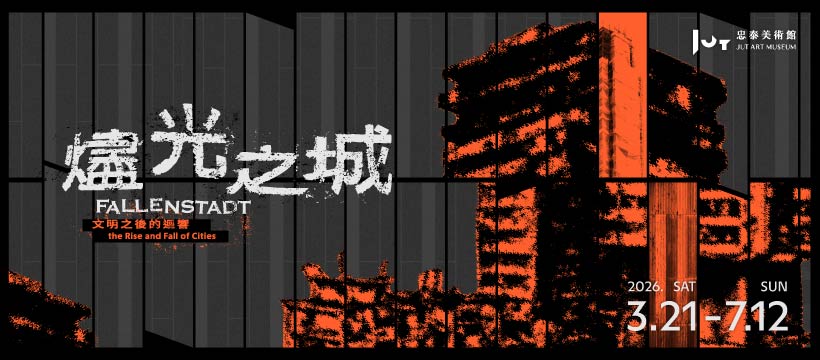
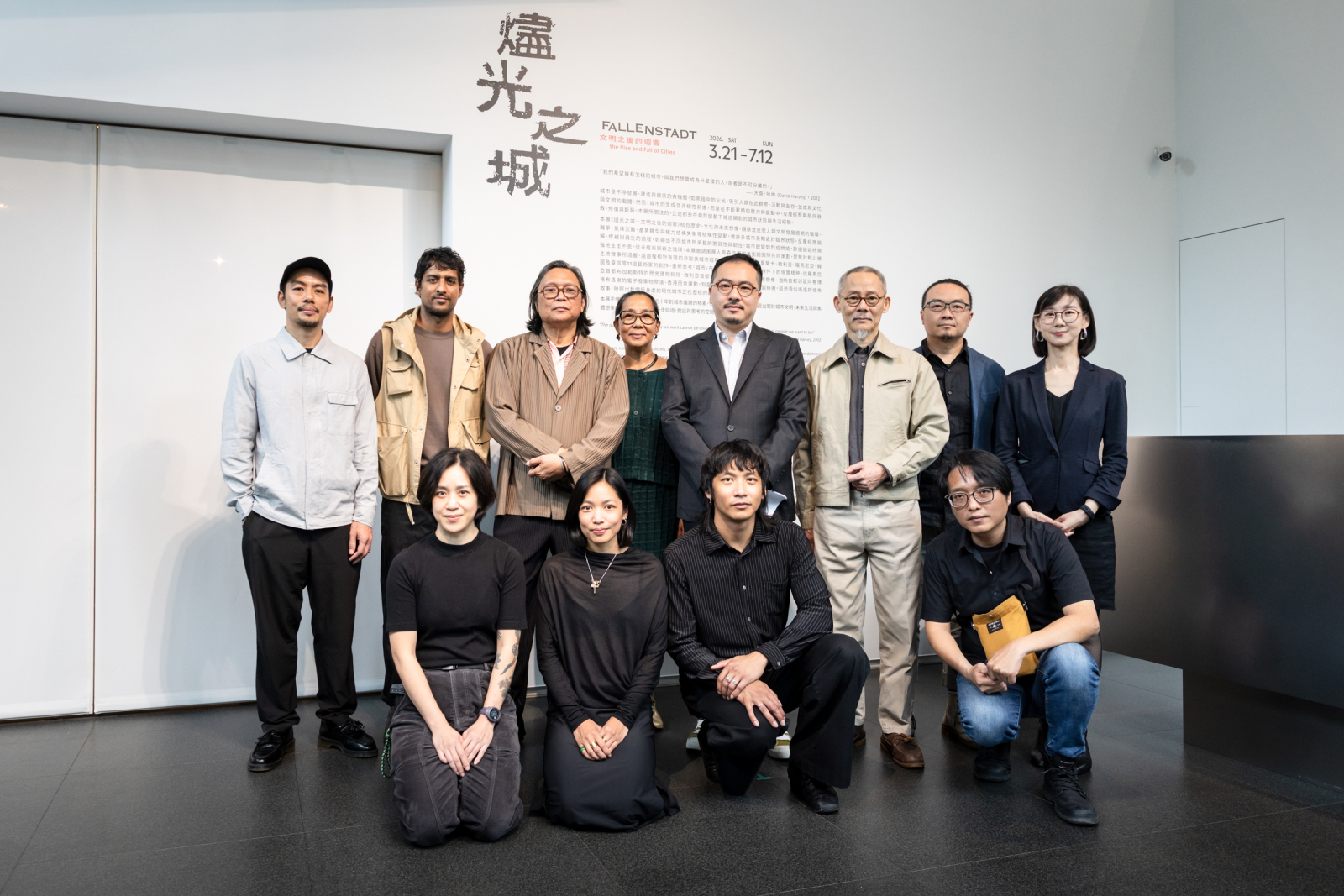
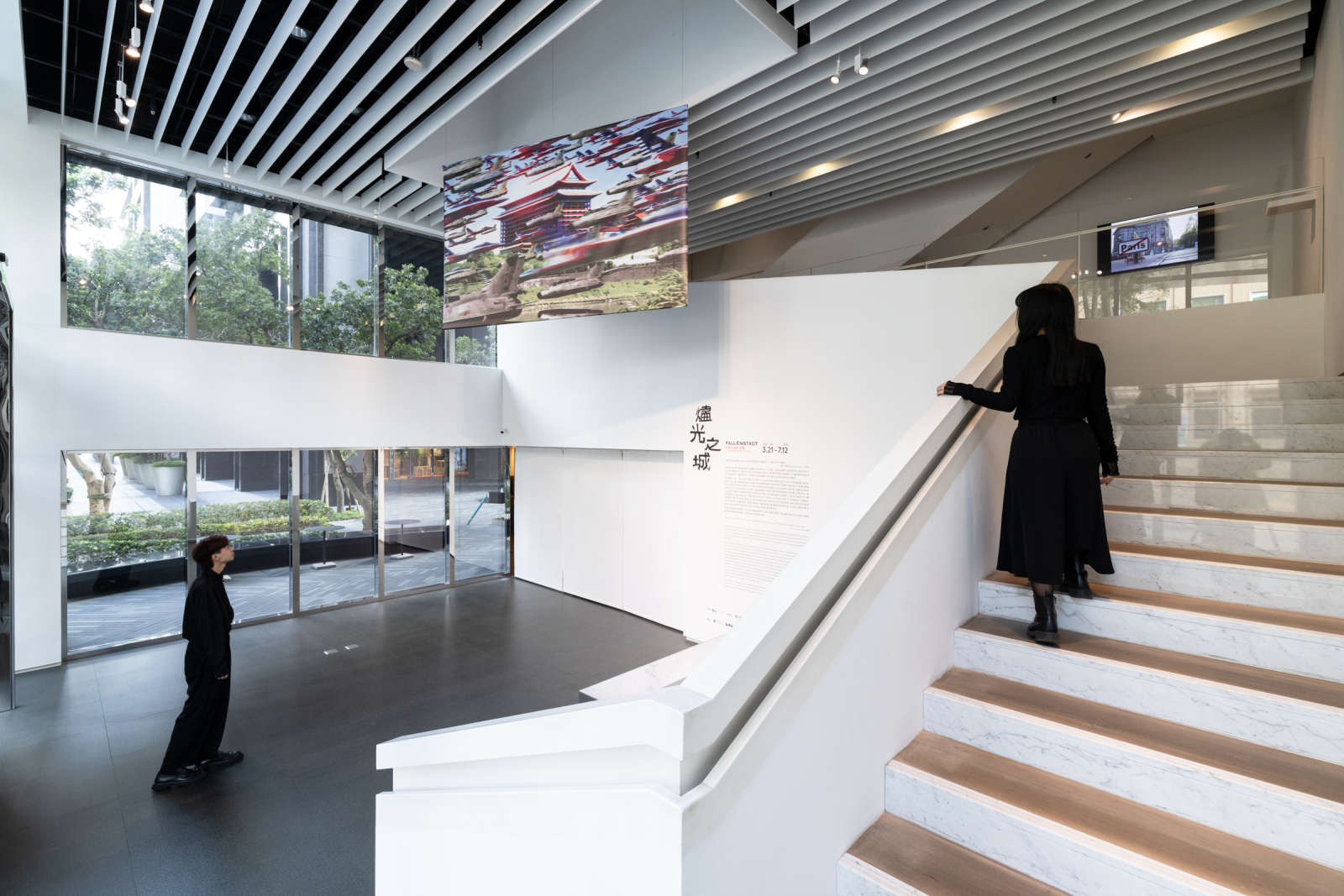
From March 21 to July 12, 2026, the Jut Art Museum presents its new contemporary art exhibition—Fallenstadt: the Rise and Fall of Cities. Co-curated by independent curator Nobuo Takamori and the team from the Jut Art Museum, this exhibition features 11 artists and collectives from the Philippines, Sri Lanka, Syria, Romania, Togo, South Korea, and Taiwan. Together, they explore the disintegration, challenges, and regeneration of urban civilizations in the age of globalization. Highlighting the turbulence and change driven by structural factors such as wars, climate catastrophes, industrial transformations, and forced displacement, this exhibition profoundly shows visitors the “veiled” cityscapes rarely seen in our globalized era, and ultimately prompts them to rethink the possibilities for the future survival of humanity.
Revealing Human Vulnerability and Resilience in the Embers: Moving Beyond the Occidental Metropolitan Imagination to Witness Uncommon Urban Scenes
Accommodating more than half of the global population, cities are emblematic of the development of human civilizations. Nonetheless, amidst the wave of globalization, some cities become projections of the good life, while others reflect the contradictions and shadows lurking beneath civilizational progress.
Curator Nobuo Takamori states: “As the proportion of the world’s urban population continues to rise, the 21st century can be aptly described as the ‘century of cities.’ However, our imagination of cities is often shaped by the glittering veneer of skyscrapers, material prosperity, and comprehensive public infrastructure. In reality, many large cities today are still confronted by the issues of inadequacy and inequality in societal infrastructure such as healthcare and education.”
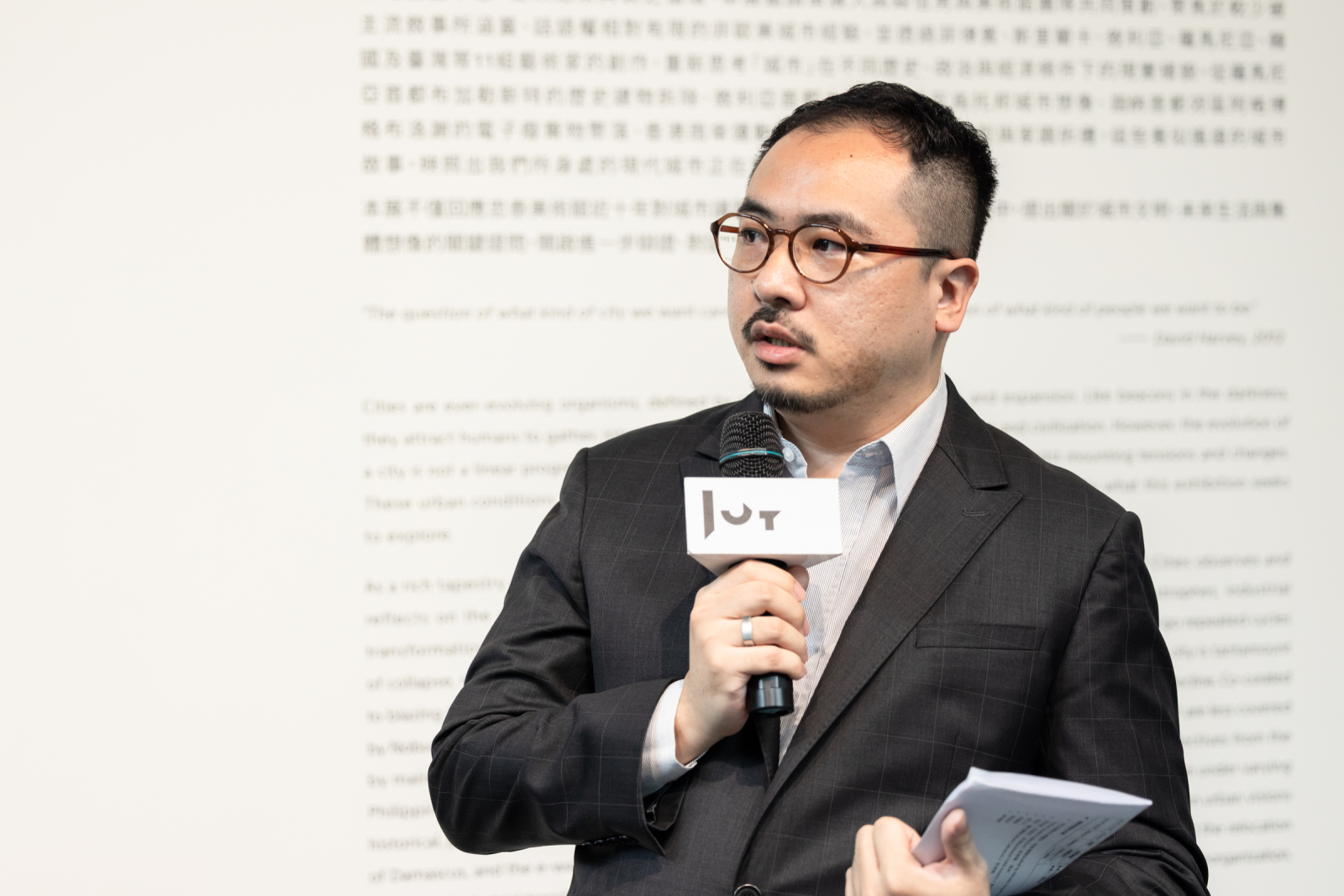
The exhibition Fallenstadt shifts its gaze from the widely familiar occidental metropolises to non-mainstream urban scenes that possess relatively limited discursive power. From the dystopian imagination of Damascus, Syria, and the harsh realities of e-waste processing sites in West Africa, to the residential demolition and displacement driven by industrial transformation in Tainan, Taiwan, the participating artists employ diverse media such as video, photography, mixed reality (MR), and large-scale, site-specific installations. Through their works, these artists not only bring visitors face-to-face with the “crises” looming over cities under varying political, economic, and historical conditions, but also unveil the “invisible systems” behind their operations and interrogate humanity’s “imagination of the city.” The exhibition title, Fallenstadt, carries a metaphorical meaning: after enduring the blazing flames of violent upheavals, cities have always risen from the ashes, demonstrating an imperishable vitality that transcends the cycles of rise and fall.
Imagining the City: Reshaping a Sense of Belonging amidst Migration and Dreams
In an era characterized by global migration, waves of migrant workers, and the prevalence of digital nomadism, the city is no longer a mere fixed dwelling. Rather, it has become a vehicle onto which people project their dreams of an ideal life and a “global city.” However, does arriving in an ideal city truly lead to a better life? And how should we reshape our imagination of the city and of “home” amidst such rapid change?
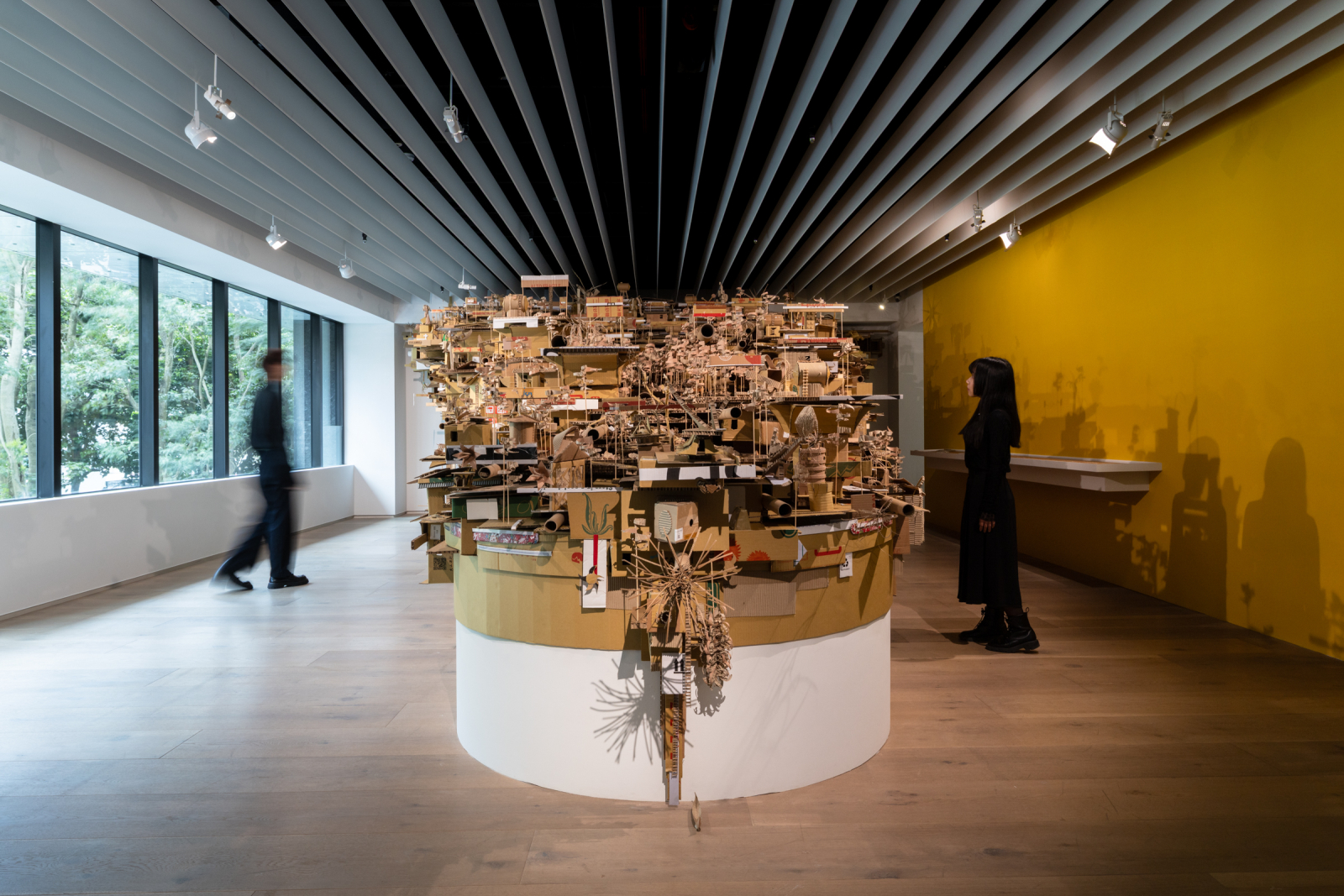
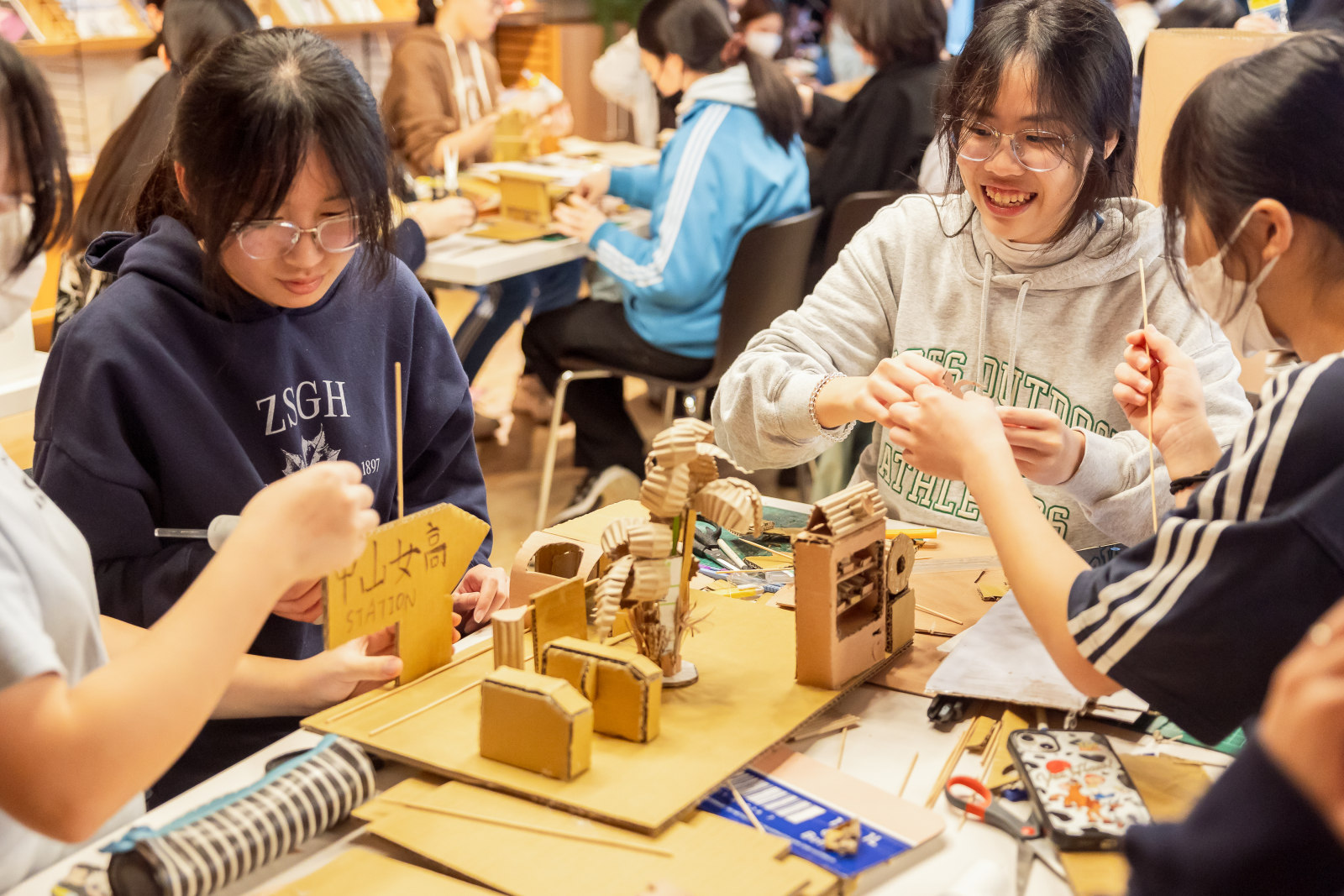
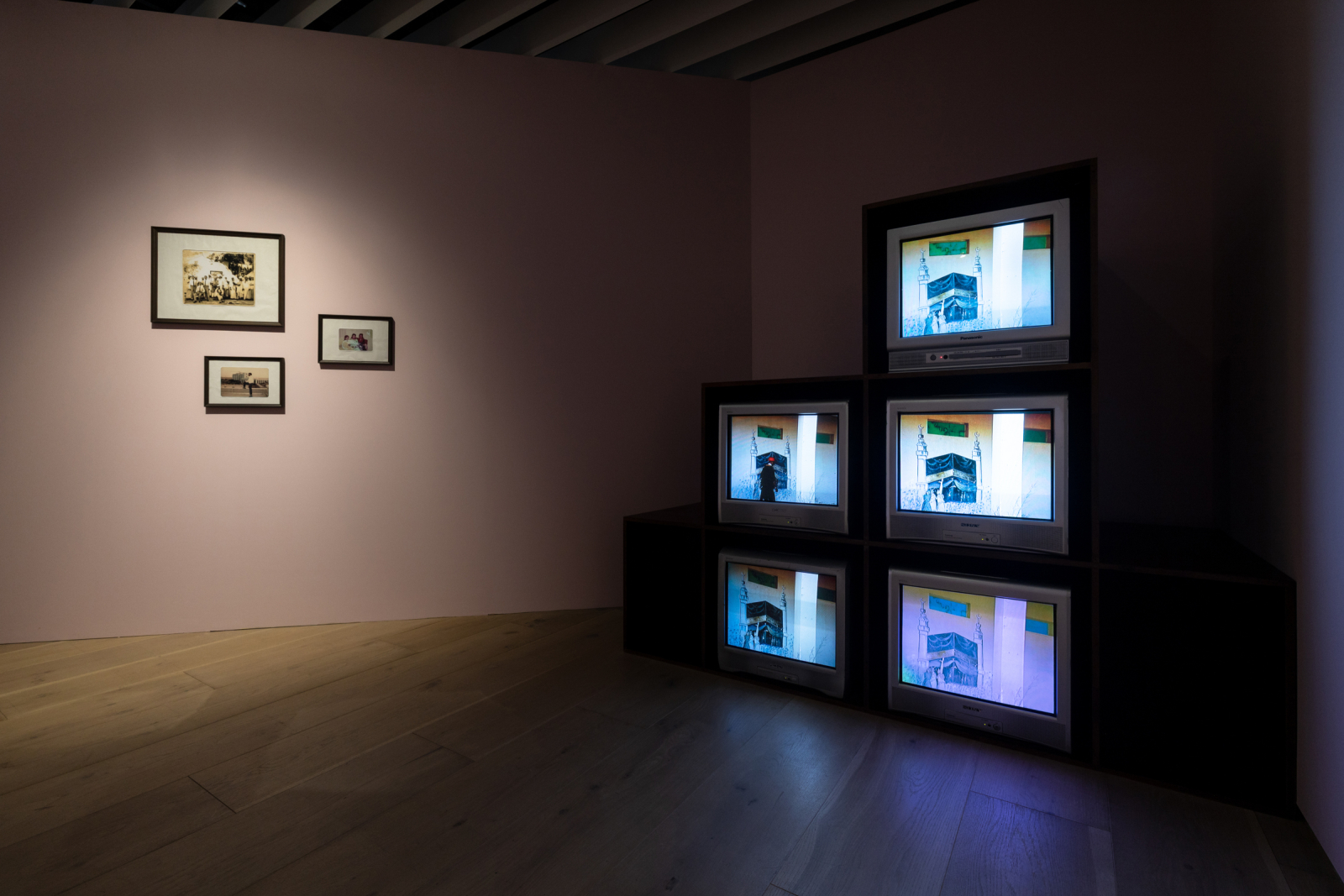
Australia-based Filipino artists Isabel and Alfredo Aquilizan, together with the Fruitjuice Factori Studio Collective, present a brand-new, large-scale, site-specific installation titled Habitations: (At Some Place) Project Another Country. Partnering with Taiwanese students and construction professionals in a co-creation workshop, they utilize stacked cardboard boxes to evoke memories of migration and diaspora, which fosters a dialogue beyond national borders. Meanwhile, Sri Lankan artist Abdul Halik Azeez explores migrant worker narratives and post-war urban transitions under Sri Lanka’s neoliberal turn via family photographs, oral histories, and his video work Stranger in a Strange Land.
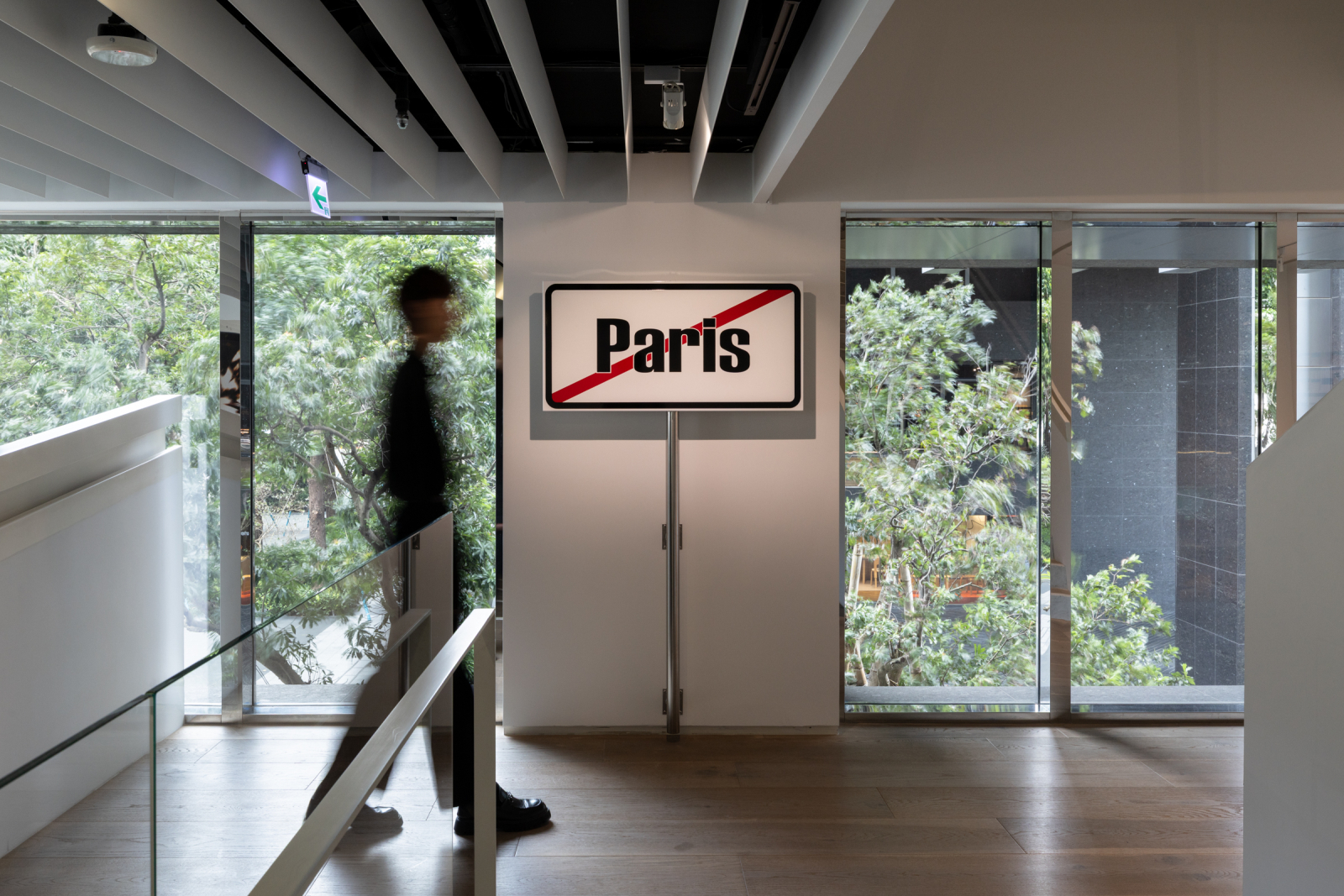
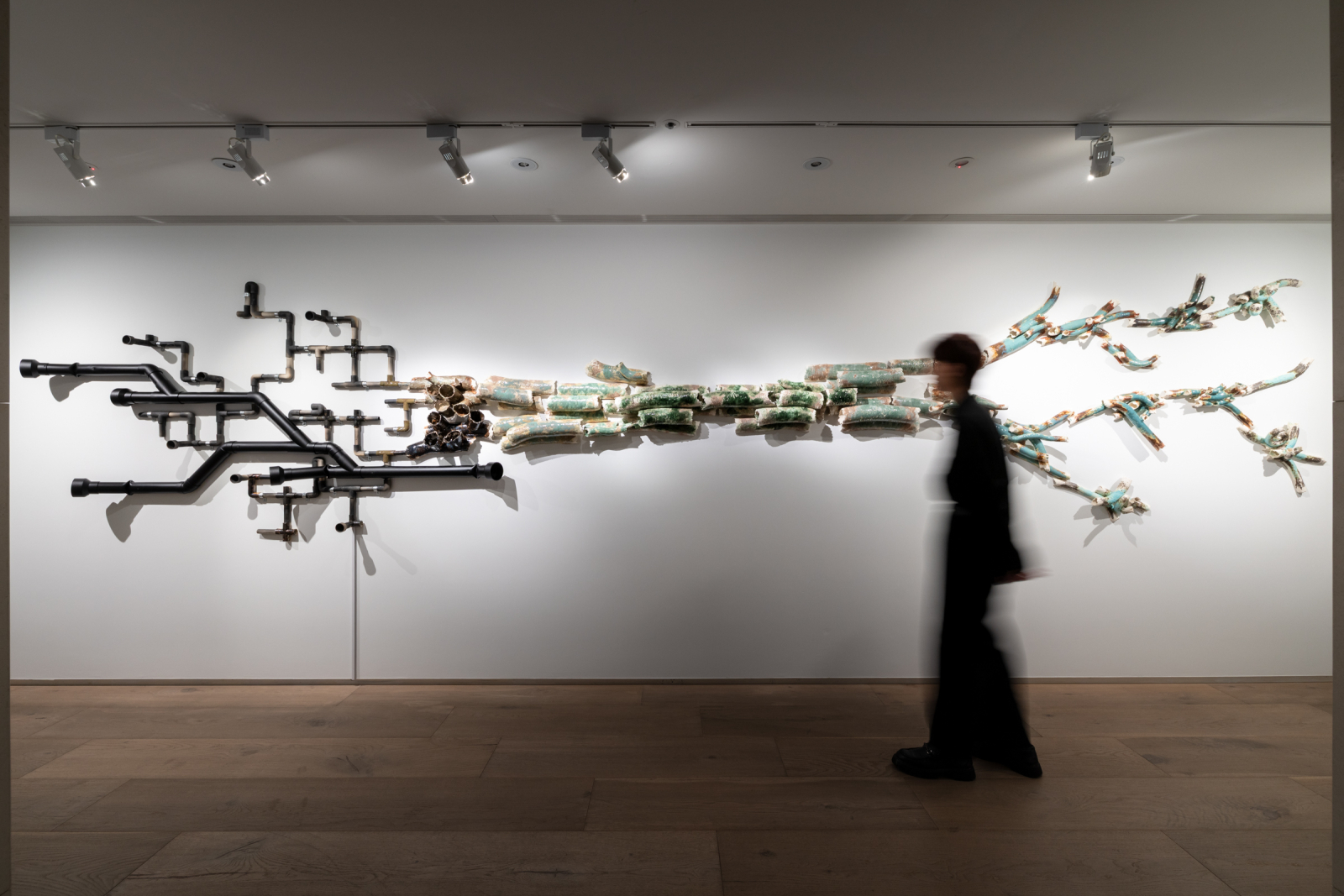
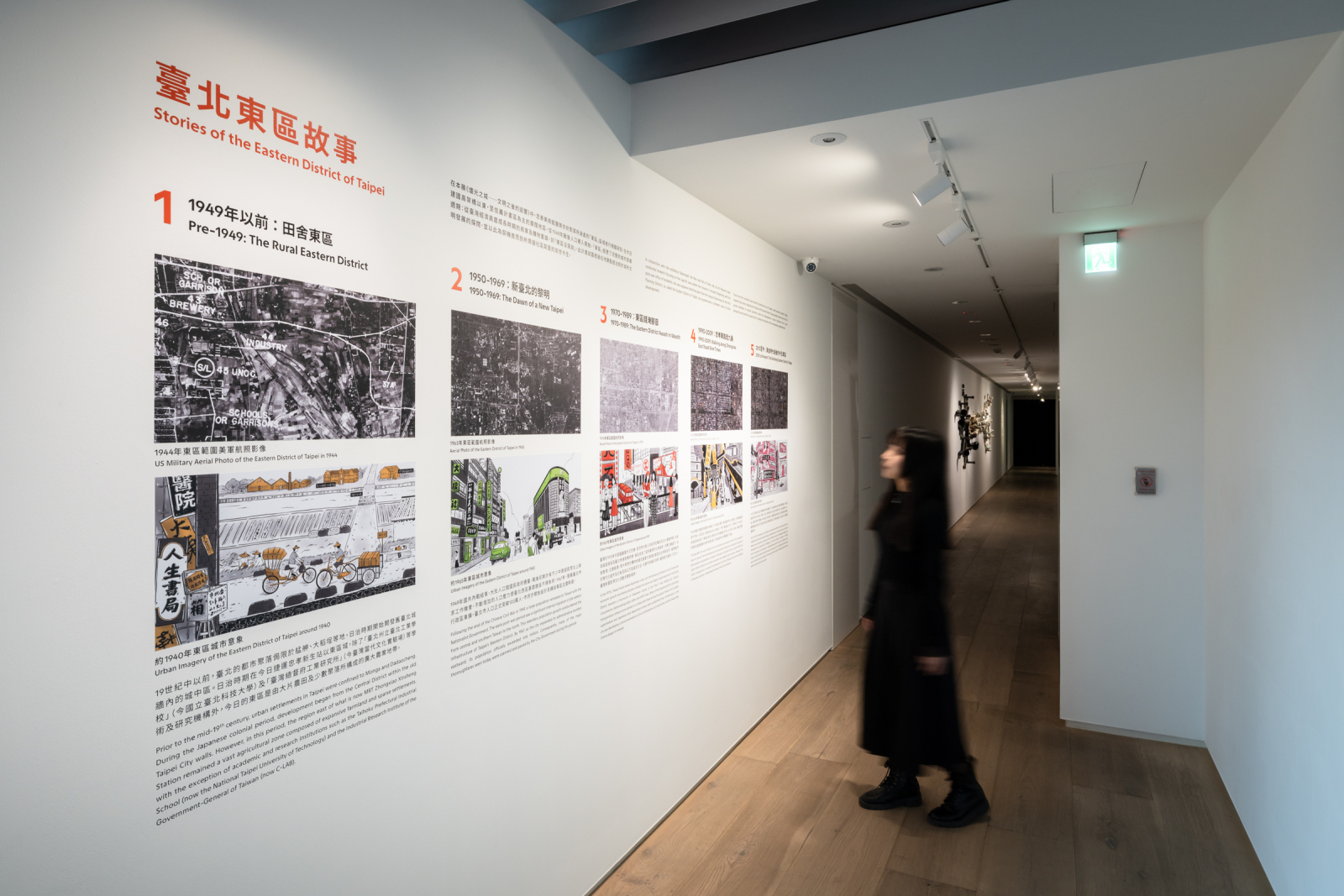
Confronting the grim realities of urban development, Romanian artist Sebastian Moldovan’s video work The Paris Project cogitates on the impermanence of and nostalgia for the capital, Bucharest, which was reduced from the “Little Paris” of Eastern Europe to ruins under the shift in the desire for power. Taiwanese artist Kuen-Lin Tsai’s latest site-specific work Who is the Beginning? What is the End? invokes the metaphor of a “hydrological system” to represent the reconfiguration of the historic agricultural Liugongzun from a natural waterway into artificial water piping during urbanization. Connected with the geographical context of the Jut Art Museum, this work not only echoes “The Eastern District of Taipei” Project compiled by the museum team, but also mirrors the constantly intertwining and mutually rewriting relationship between global urban development and the natural environment.
Urban Crises: Armed Conflict, Algorithmic Control, and Collective Anxiety
How far away is war actually? From the Russo-Ukrainian War to conflicts in the Middle East, there tends to be nothing but a fine line between a habitable city and crumbling ruins. Subjected to a pincer attack from current global geopolitical turmoil and successive natural catastrophes, the seemingly prosperous façades of modern cities conceal a fragile reality underneath.
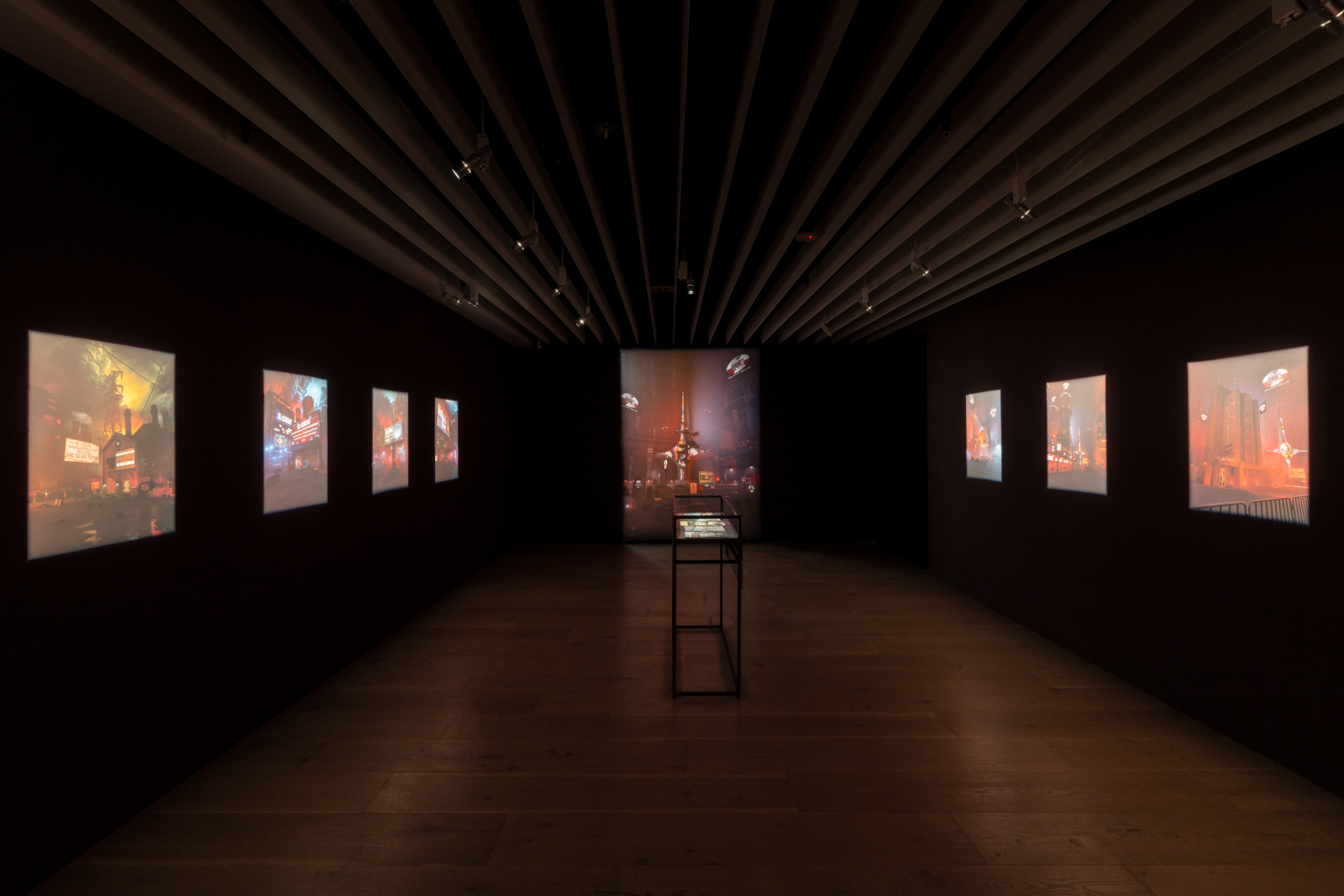
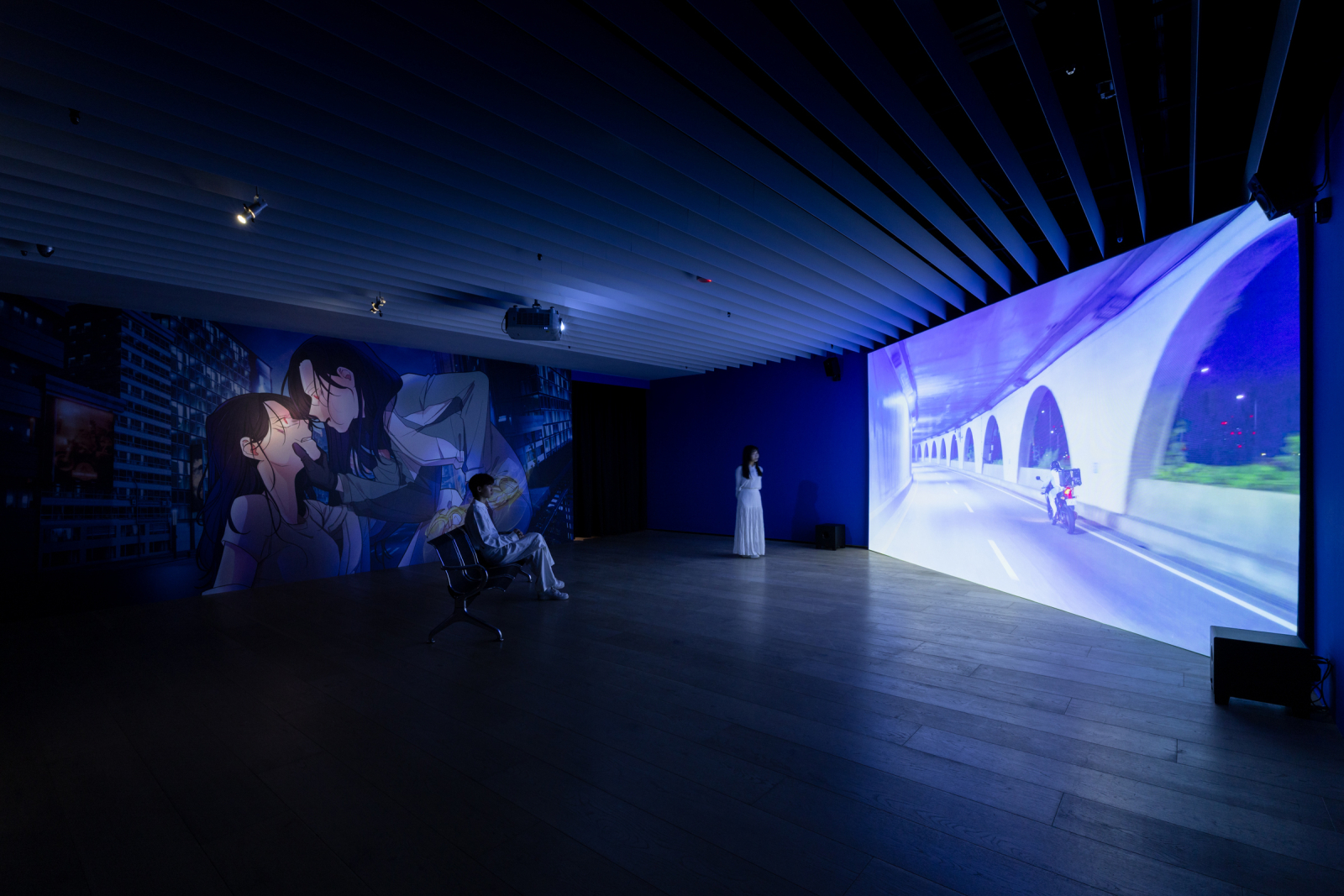
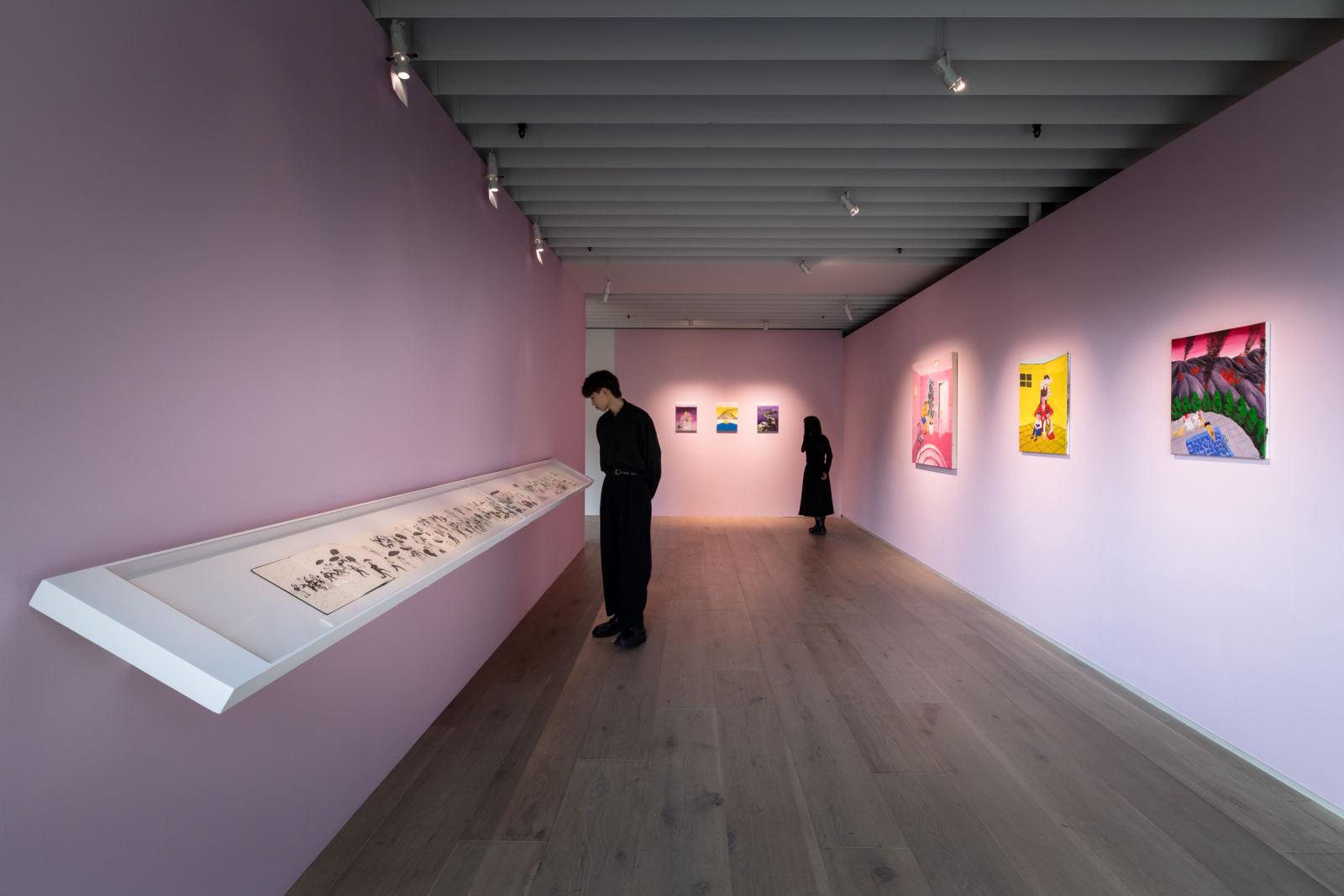
Created 26 years ago, Taiwanese avant-garde artist Dean-E Mei’s Decisive Battle Outside Territory Series employs digital collages of the real and the virtual to rehearse the strategic slogan of “Decisive Battle Outside the Territory” as a virtual war spectacle. In his photomontage series Damastopia, Syrian civil war survivor Ayham Jabr collages the ruins of Damascus into a surreal mythology, addressing how the war calamity is transfigured into a ritual of survival in its aftermath. South Korean artist Ayoung Kim’s video work Delivery Dancer’s Sphere revolves around the hyper-accelerated gig economy during the COVID-19 pandemic. The work not only presents a fictionalized, algorithm-dominated Seoul, but also reflects contemporary society’s obsession with speed and optimization. Furthermore, in her works such as Drunk-Tank Pink and Home, sweet home #2, Taiwanese artist Hai-Hsin Huang uses her signature blend of dark humor and unsettling brushstrokes to capture the collective anxiety embedded in quotidian urban life.
Invisible Urban Systems: The Hidden Mechanisms Sustaining Modern Cities
The prosperity and convenience of modern urban life rely heavily on a colossal, globalized yet concealed system of operations. This invisible system connects transnational trade, industrial structures, as well as the distribution and exchange of labor and resources, thereby underpinning the daily routines we take for granted.
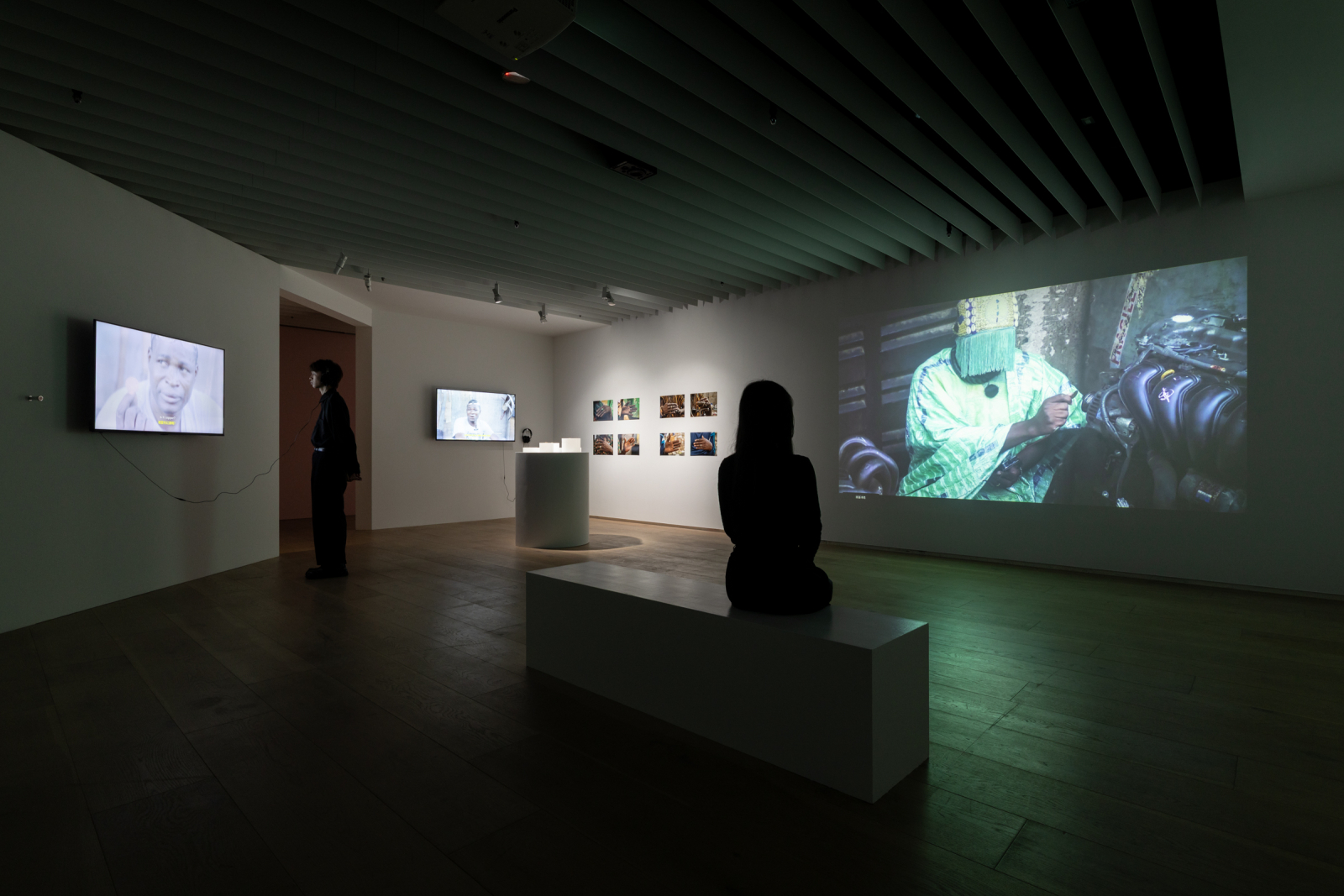
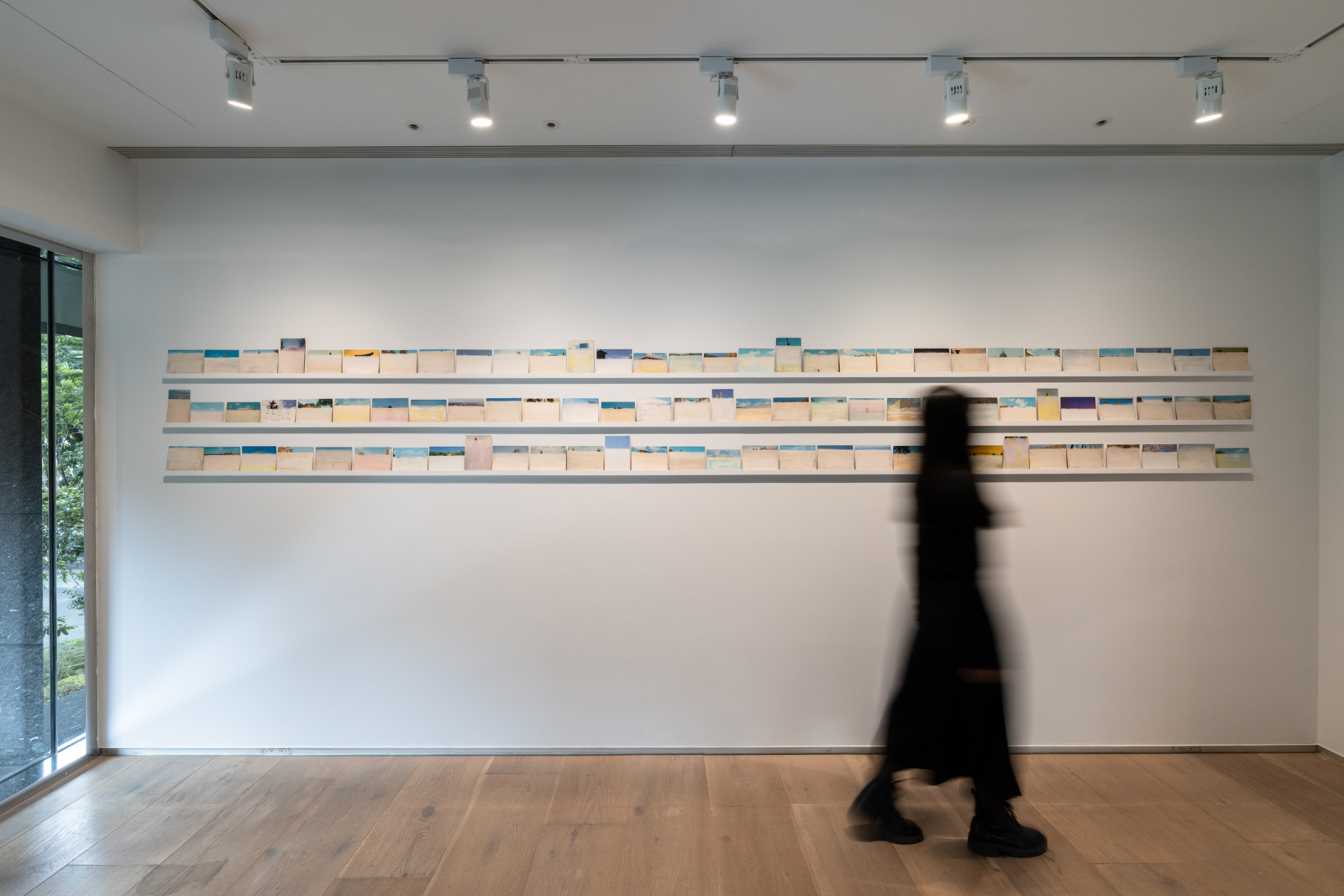
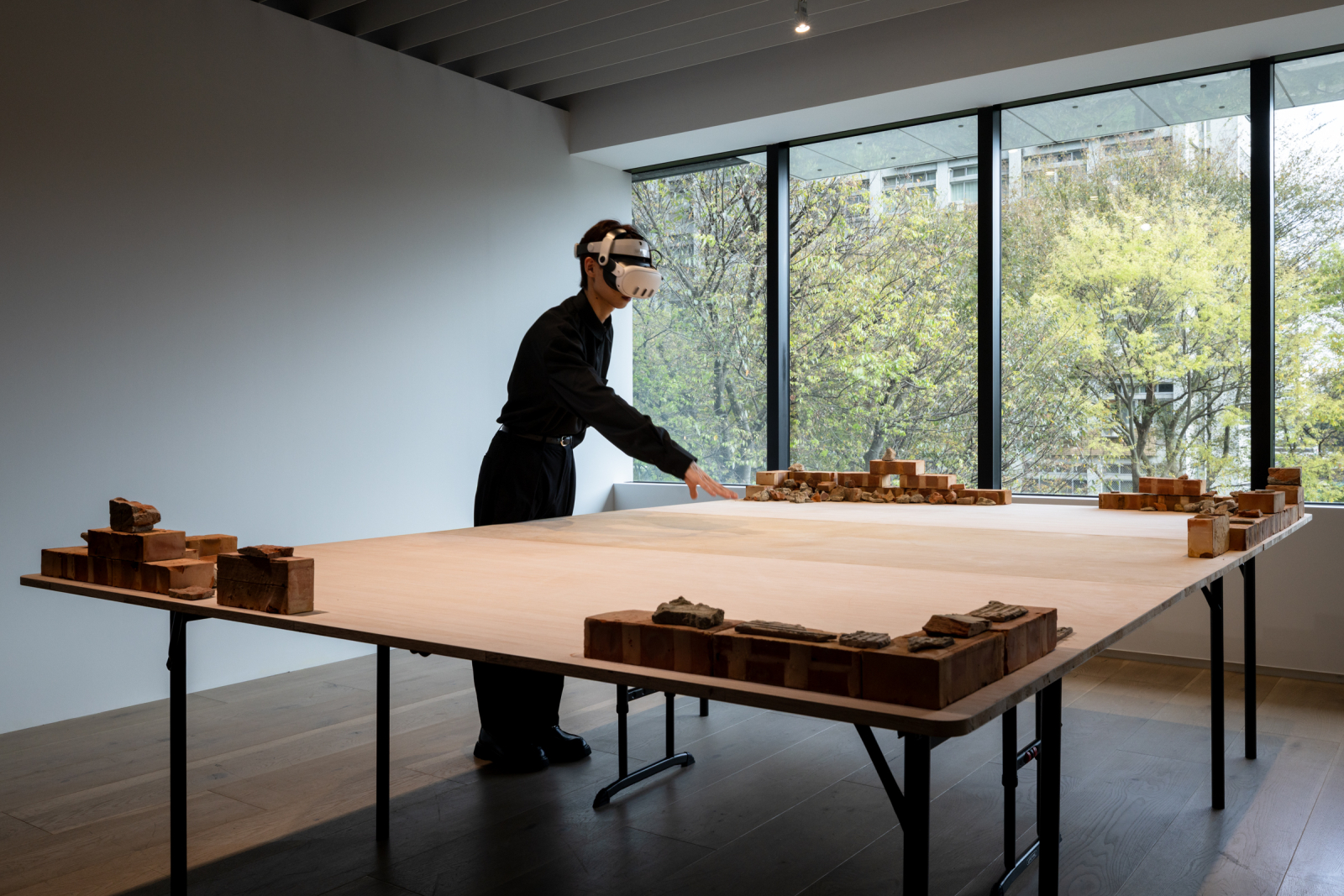
How do your discarded smartphones and old vehicles become resources for others’ survival? In the transnational collaborative project The Currency, Taiwanese artist Musquiqui Chihying, German artist Gregor Kasper, and Togolese artist Elom 20ce point their cameras at industrial waste settlements in West Africa, documenting how modern cities “outsource” their post-consumer waste management to the other side of the globe. Through the hands of local laborers, these discarded components are transmuted into exquisite handmade ornaments and incorporated into religious rituals. This process provides a glimpse of how the material and the spiritual are both revalued within the global economic cycle. In his work Watermarks, Filipino artist Mark Salvatus delicately erases tourist attractions and landmarks from postcards, which implies the impact of rising sea levels on island nations and reveals the cascading disasters caused by global climate change. In response to the systemic forces of urban development and industrial transformation, Taiwanese artist Shu-Kai Lin and Wayne Ashley, founder of the New York-based FuturePerfect Studio, adopt MR technology in City of Apparition to reconstruct Lin’s demolished home in Tainan, his family’s business, and his urban memories in a virtual realm, thereby interrogating how—under the impersonal machinery of urban development—personal and collective memories might endure through technology and imagination.
Fallenstadt Encapsulates the Jut Art Museum’s Decade-long Urban Observation
The Jut Art Museum has consistently staged exhibitions since its inauguration in 2016—including A Nonexistent Place, The Flying Land, Paradise Lost, and Broken Landscapes—to address issues concerning the “city” and the “future.” The current exhibition, Fallenstadt, not only reflects the insights accumulated throughout this decade but also offers visitors a broader perspective to observe the world, inviting profound reflections upon urban civilizations, future lifestyles, and collective imagination.
Shan-Shan Huang, Director of the Jut Art Museum, remarks: “Located between a former railway and irrigation canals, the Jut Art Museum has witnessed nearly two decades of transformation on this land and therefore stands as a channel that links culture with society. We expect the museum to be not merely a public platform providing artistic and cultural resources, but a cultural institution that inspires societal rumination and introspection.”
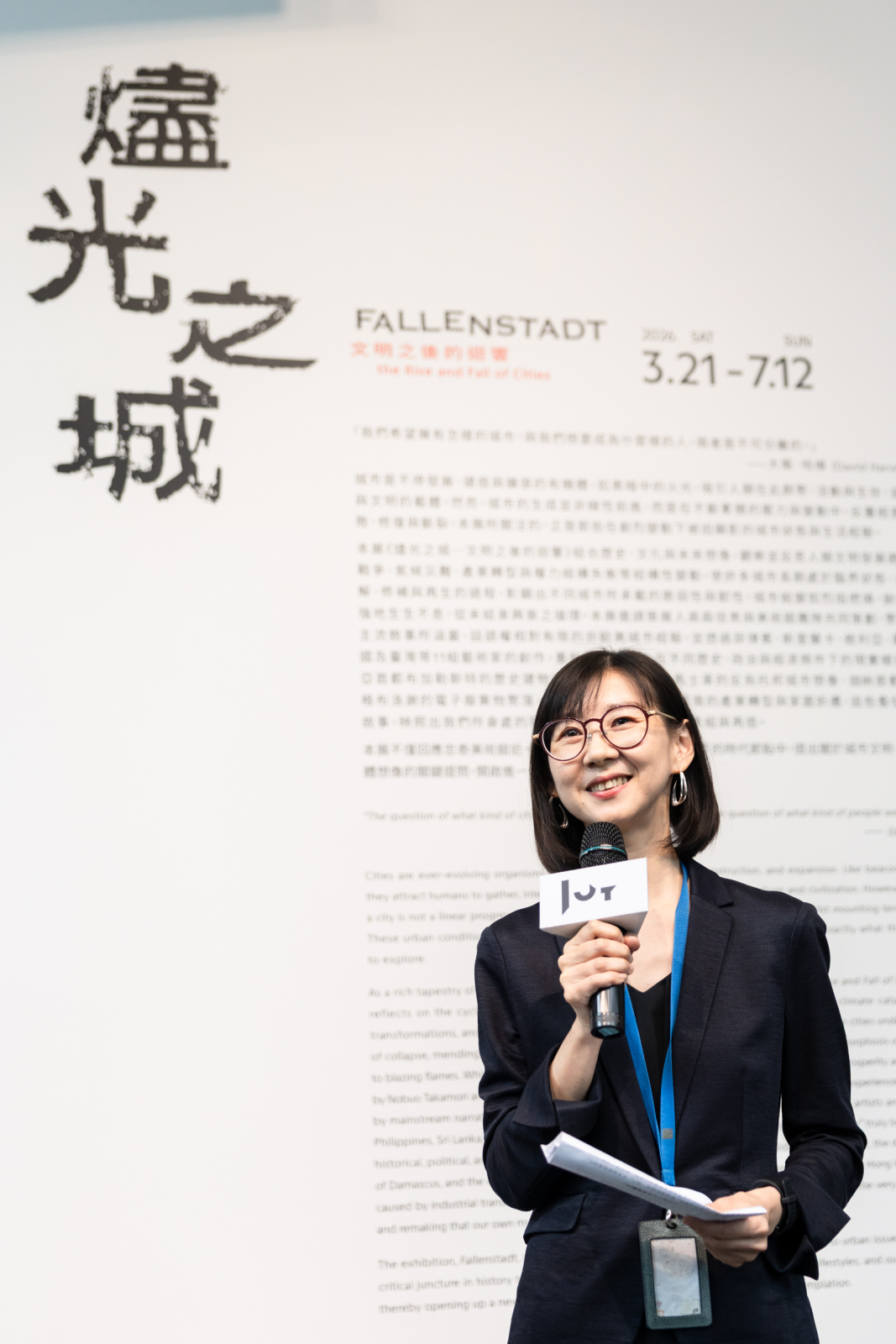
During the run of Fallenstadt, a diverse array of events will be rolled out, including expert-led tours, scheduled guided tours, and urban walking tours. For more details on the exhibition, side events, and special ticket offers, please visit the museum’s official website.
Information
Fallenstadt: the Rise and Fall of Cities
https://jam.jutfoundation.org.tw/en/exhibition/107/5429
Venue|Jut Art Museum (No.178, Sec. 3, Civic Blvd., Da'an Dist., Taipei City 106, Taiwan)
Opening Hours|TUE-SUN 10:00-18:00 (Closed on Mondays)
Admission|General TWD 150, Concessions TWD 100 (Student, seniors aged 65 and above, and groups of 10 or more)
Free Admission for the disabled and a companion, children aged 12 and under (Concessions or Free Admission upon presentation of valid proof)
Student Day on WED|Free Admission once on Wednesdays upon presentation of valid student ID
Curator|Nobuo Takamori
Artists
- Elom 20ce (Togo)
- Ayham Jabr (Syria)
- Isabel and Alfredo Aquilizan, The Fruitjuice Factori Studio Collective (Philippines/ Australia)
- Abdul Halik Azeez (Sri Lanka)
- Shu-Kai Lin (Taiwan)
- Ayoung Kim (South Korea)
- Wayne Ashley (FuturePerfect Studio) (U.S.A)
- Mark Salvatus (Philippines)
- Gregor Kasper (Germany)
- Musquiqui Chihying (Taiwan)
- Dean-E Mei (Taiwan)
- Hai-Hsin Huang (Taiwan)
- Sebastian Moldovan (Romania)
- Kuen-Lin Tsai (Taiwan)
*The list shows in order of stroke numbers by artists’ first character of their Mandarin surnames.
Organizer|Jut Art Museum
Cultural Partners|Australian Office, Taiwan Contemporary Culture Lab, eslite member
Official Hotel Partner|MGH Mitsui Garden Hotel Taipei Zhongxiao
Media Partners|Art Emperor, La Vie, The Reporter
Event Partners|NOKE JUT RETAIL, ONIBUS
Exhibition Team
Exhibition Supervisors|Aaron Y. L. Lee, Alex Y. H. Lee, Shan-Shan Huang
Exhibition Coordinator|Tsuei-Yi Jang
Coordinators|Ying-Peng Chen, Yen-Hsiu Chen, Chia-Ching Lin, Ying-Hsuan Liu
Communications and Marketing Coordinator|Szu-An Chen
Communications and Marketing|Yen-Shan Li, Yu-Chin Liou, Yi-Ning Lin, Chia-Chen Tsao
Public Service|Tsung-Ping Hung, Pei-Chun Tsai, Yu-Tzu Lin
Administration Coordinator|Hsin-Yi Lin
Visual Designer|Flowing Design
Graphic Designer|Tsai-Yuan Tsai
Lighting Designer|Chung-Chang Ho
Multimedia Design|UN ART
The press kits can be downloaded at the link: https://drive.google.com/drive/folders/1DCtofaGAMgaFy_ES9ZvEm4ALH6Rbp4Sf?usp=drive_link
Standard Usage for Images: Photo credit/by must be given where applicable, and please indicate © Jut Art Museum.

