
Taipei-based Jut Art Museum Celebrates Its 10th Anniversary: Curating “City and Future,” Leaping Forward as a Beacon of Asian Contemporary Culture
Partnering with Tokyo’s Mori Art Museum and New York’s Wallach Art Gallery at Columbia University to Launch the 10th Anniversary Project
TAIPEI, Taiwan — As Taiwan’s first art museum to focus on issues concerning the “future” and the “city,” the Jut Art Museum celebrates its 10th anniversary this year (2026). Based in Taipei with a global perspective, the Jut Art Museum will enter its next phase through “Urban Curatorial Power,” “International Dialogue Power,” and “Learning Resource Construction.” This August, the Jut Art Museum is partnering with the Mori Art Museum in Tokyo to co-curate the first international edition of The Architecture of Sou Fujimoto: Primordial Future Forest. In 2027, it will partner with the Wallach Art Gallery at Columbia University in New York to stage a joint exhibition featuring Taiwanese artists. Subsequently, it will launch a curatorial talent cultivation program for architecture exhibitions. The Jut Art Museum aspires to leap from a deeply rooted “Taipei cultural landmark” to a “beacon of Asian contemporary culture” with a global impact.
A Decade of an Urban Art Museum: Accumulation of Cultural Energy and Social Practice
Since its inception in 2016, the Jut Art Museum has consistently presented perspectives on its three major curatorial themes, viz., “Future Issues,” “Urban Architecture,” and “Contemporary Art.” Over the past decade, its partner institutions have spanned the globe, from Europe and the Americas to Australia, Africa, and Asia. From introducing major architectural issues and figures such as Brutalism, Tadao Ando, and Alvar Aalto, to curating exhibitions on cities and future living speculations, it has held a total of 26 shows that not only bridge the transdisciplinary issues surrounding “architecture” and the “city” but also address the gap in transdisciplinary curation in Taiwan.
10th Anniversary Project I: Urban Curatorial Power—Transnational Dialogue on Cities and the Future
Approaching its 10th anniversary, the Jut Art Museum adopts “Urban Curatorial Power” to continue translating issues about the “future” and the “city” through exhibition research, international collaborations, and public dialogues. To ignite the 10th anniversary project, the following three landmark exhibitions will lead the charge:
The 10th anniversary project will be inaugurated by The Architecture of Sou Fujimoto: Primordial Future Forest, opening on August 15 this year. In a transnational collaboration, the Jut Art Museum and Japan’s Mori Art Museum are bringing the large-scale solo exhibition of architect Sou Fujimoto from Tokyo to Taipei as the first stop of its overseas tour. This exhibition highlights the essence of the 30-year creative career of Sou Fujimoto—the Site Design Producer for the main venue of Expo 2025 Osaka, Kansai, Japan, and the designer of its spiritual emblem, The Grand Ring. In addition to precious models and sketches, a 1:5-scale partial model of The Grand Ring will be on display at a historical site in Taipei. Through Sou Fujimoto’s philosophy of the “symbiosis between architecture and nature,” the Jut Art Museum invites the public to explore the “futurology” of cities and society together. Presale tickets for the exhibition will officially go on sale from now on the Klook and udn Tickets platforms. Early-bird discounts are available during the presale period, and a single ticket grants access to both exhibition venues.
The Jut Art Museum 10th Anniversary Exhibition, scheduled for March 2027, is independently curated by the Museum’s team. Breaking away from a chronological framework, it will review the curatorial context of the 26 shows over the past decade and conduct an in-depth assessment of Taiwan’s contemporary art museum ecology, thereby responding to evolving issues concerning the city and the future.
The OMA Exhibition (working title), scheduled to open in August 2027, will be OMA*AMO’s solo exhibition in Taiwan focused on the theme of regeneration. The exhibition will explore the key relationship between heritage, urban design, and the future. Scholars from home and abroad will engage in dialogues, reflecting on Taiwan’s urban development potential from a global perspective.
10th Anniversary Project II: International Dialogue Power—Partnering with the Miriam and Ira D.Wallach Art Gallery at Columbia University in New York to Showcase Taiwan’s Resilience to the World
Moving towards the next decade, the Jut Art Museum will shift from deep local roots to international dialogue. In 2027, partnering with the Wallach Art Gallery at Columbia University, the museum will make its U.S. debut with A State of Temporariness: Contemporary Taiwanese Art. Supported by the Ministry of Culture’s “Kuroshio Project,” this exhibition is co-curated by Shan-Shan Huang (Jut Art Museum Director) and Betti-Sue Hertz (Wallach Art Gallery Director and Chief Curator). Featuring 10 prominent artists, the exhibition will revolve around the concepts of “temporary residency”, “impermanence,” and “precarity.” It reveals Taiwan’s enduring resilience and cultural vitality amid the dual vulnerabilities of geopolitical struggles and natural disasters, initiating a constructive dialogue with the international art scene.
10th Anniversary Project III: Learning Resource Construction—Transforming a Decade of Energy into a Public Think Tank and Launching a Curatorial Talent Cultivation Program
The Jut Art Museum will also transform its cultural energy accumulated over a decade into long-term, shareable learning resources, deepening its efforts in two major areas: research publications and talent cultivation.
The Jut Art Museum plans to publish the exhibition catalog for Shifting Horizons: The Generation of Emancipatory Architecture in Taiwan, offering an in-depth review of the drastic changes in Taiwanese architecture between 1980 and 2010. It is also planning the Jut Art Museum 10th Anniversary Special Issue, which will recount the museum’s evolutionary journey from establishing its positioning to connecting globally across four major aspects: the city, architecture, art, and the future.
The Jut Art Museum has also announced the launch of the “Jut Architecture Academy: Curatorial Talent Cultivation Program for Architecture Exhibitions.” Over the next decade, it expects to (1) build a platform that pools academic and professional resources transnationally; (2) promote curatorial research and practice in “architecture, urbanism, and spatial culture;” and (3) develop a long-term learning and cultivation program for curators.
Leaping Forward as a Beacon of Asian Culture: Pioneering the Vision for the City and the Future
Founded in 2016 by the Jut Foundation for Arts and Architecture, the Jut Art Museum took shape on a decade of the foundation’s accumulated content and professional team capabilities, which make it Taiwan’s first art museum to focus on issues concerning the “future” and the “city.” It continues to curate thematic exhibitions and produce content centered on three core areas, namely “Future Issues,” “Urban Architecture,” and “Contemporary Art.”
Yen-Liang Lee, CEO of the Jut Foundation, stated: “From the foundation to the art museum, we have been on this path of promoting architectural culture for nearly 20 years. We clearly understand the importance of professional talent to the environment, and we hope the talent cultivation program will infuse sustainable momentum into Taiwan’s curatorial environment.”
Shan-Shan Huang, Director of the Jut Art Museum, shared: “The 10th anniversary is a crucial moment to look back at our accumulated achievements and realign our course. Leaping into the next decade, we will not only focus on issues surrounding the city and the future through the lens of architecture and art, but also keep promoting public aesthetic education and knowledge production to initiate more international dialogues. We aspire to become a beacon of Asian culture with a global impact.”
About Jut Art Museum
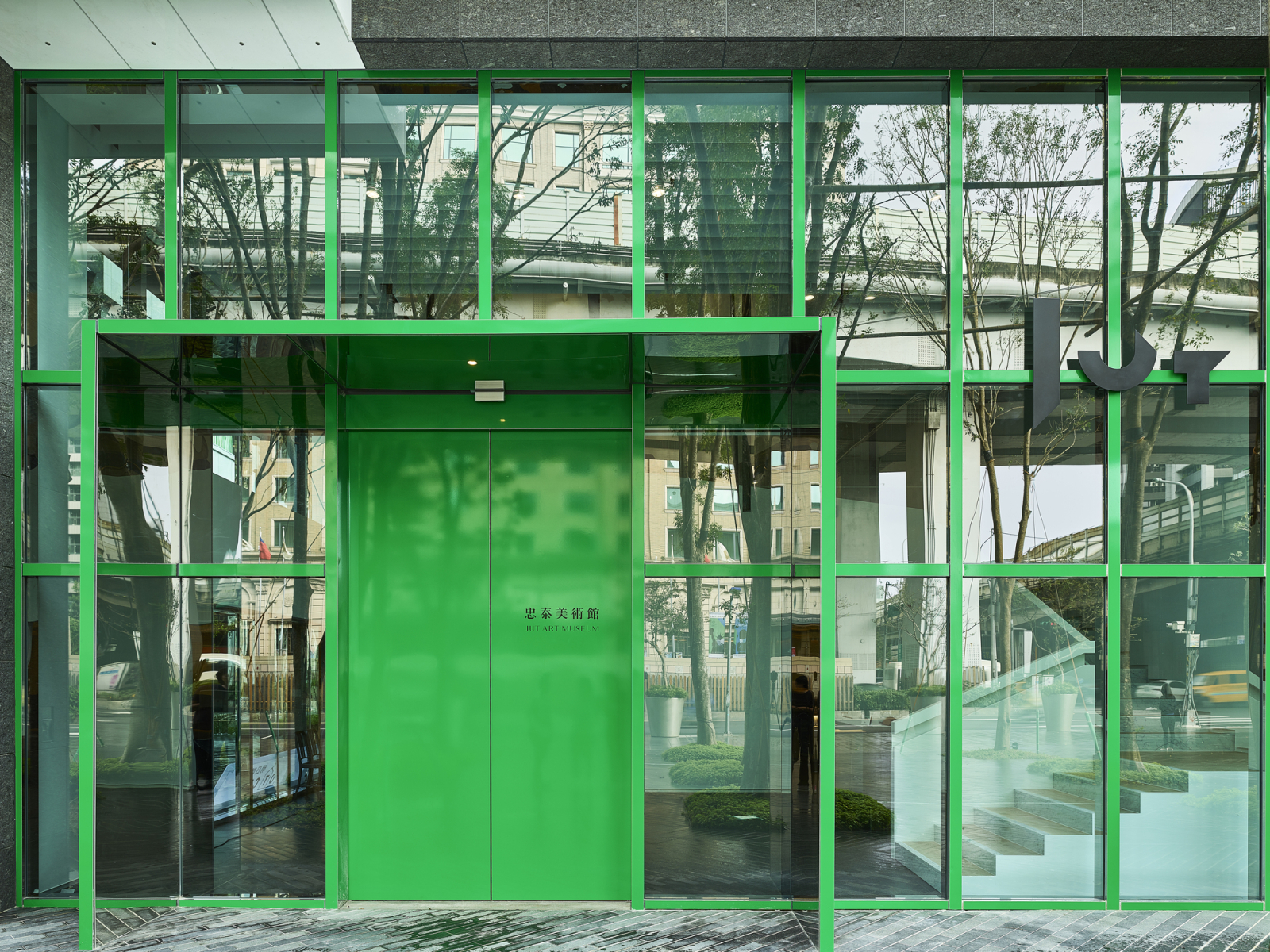 © Jut Art Museum
Mission
Jut Land Development’s 30th anniversary, and the Jut Foundation for Arts and Architecture (JFAA)’s 10th birthday, culminates in the establishment of the Jut Art Museum (JAM) in 2016. It is a milestone commemorating the history of Taiwan’s architectural aesthetics.
We anticipate that JAM to act as a new form of platform, catalyst and think tank devoted to corporate social responsibility fulfillment and addressing the societal dynamics of the 21st century. We also anticipate it to carry on the legacy of “A Better Tomorrow” that defines much of JFAA’s work, to become the first museum in Taiwan that is focused on the issues of “future” and “city.”
Vision
The Jut Art Museum, located in the heart of Taipei, is also where the Jut Foundation’s debut exhibition of “Museum of Tomorrow” is held. After ten years of circuit shows across the city, the exhibition is now back to where it all started, becoming a “showpiece in the heartland of the city and urban inhabitation.”
As an up-and-coming art establishment, JAM serves to explore what our future might hold, and transdisciplinary issues. The curation process of JAM is three-pronged: “future,” “urban architecture,’ and “contemporary art.”
Japanese architect Jun Aoki is tasked with spacing designs of JAM. The identification system is developed by Atsuki Kikuchi. This is their first museum collaboration project in Taiwan. JAM – a statement of both sophistication yet cutting-edge conception – is downtown’s new architectural and art landmark; and it is poised at remaking and bringing new energy into Taipei’s cityscape.
Website https://jam.jutfoundation.org.tw/en
Facebook https://www.facebook.com/JUTARTMUSEUM
Instagram https://www.instagram.com/jutartmuseum/
The press kits can be downloaded at the link: https://drive.google.com/drive/folders/1PpY0nAc2cxIiuSwevQQXhbdG36MaqfBL?usp=sharing
Standard Usage for Images: Photo credit/by must be given where applicable, and please indicate © Jut Art Museum.

