Preface
Text / Jut Art Museum
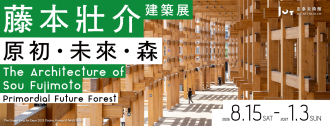
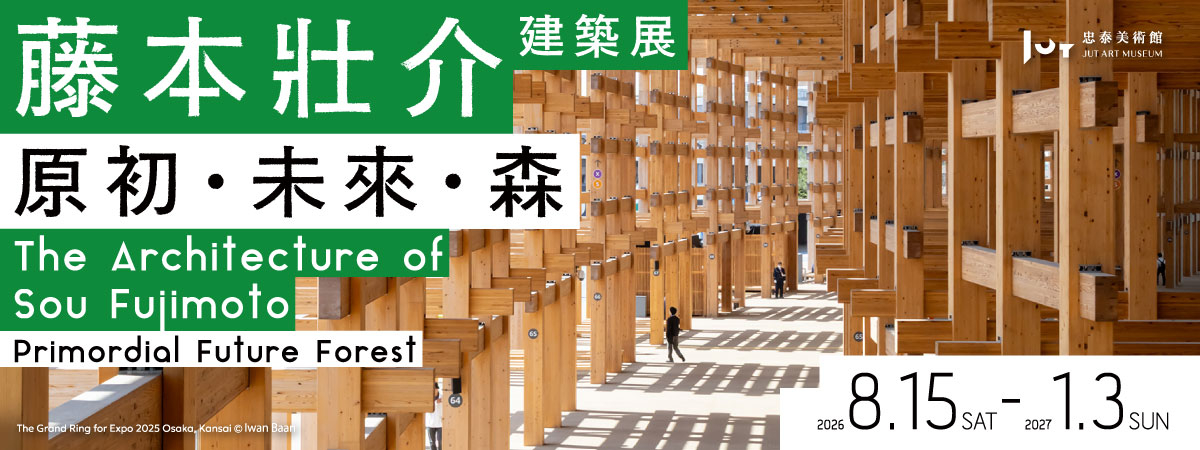
In celebration of its 10th anniversary in 2026, the Jut Art Museum is launching a series of exhibitions that continue its long-standing dedication to issues concerning the “city” and the “future.” For the first event of this series, the museum has invited renowned Japanese architect Sou Fujimoto (born in 1971 in Hokkaido) to Taiwan for his solo exhibition, The Architecture of Sou Fujimoto: Primordial Future Forest. Fujimoto’s architectural works not only exhibit symbiosis and permeability amidst the interdependence between nature and architecture, but also encapsulate the outlines and thoughts of future cities. His design philosophy coincides perfectly with the long-term vision of the Jut Art Museum. Through this exhibition, we look forward to exploring the futurology of architecture and society alongside our Taiwanese audience.
Sou Fujimoto was deeply influenced by the lush forests of his native Hokkaido. This upbringing shaped his design philosophy, fostering an emphasis on the relationship between the urban environment and the natural world. Consequently, his architectural works are characterized by designs that blur the boundaries between the built and the natural. Breaking away from the traditional mentorship lineage system of the Japanese architectural community, Fujimoto established his own practice and made his mark with The Aomori Museum of Art Design Competition Proposal in 2000. Since then, he has completed a series of celebrated projects, including the Musashino Art University Museum & Library (Tokyo, 2010), the Serpentine Gallery Pavilion 2013 (London, 2013), the L’Arbre Blanc (The White Tree) Residential Tower (Montpellier, 2019), and the House of Music Hungary (Budapest, 2021). Notably, he served as the Site Design Producer for Expo 2025 Osaka, Kansai, Japan—a site that signified the Expo’s return to Japan after half a century. The openness and inclusivity exemplified by The Grand Ring, the Expo’s main structure, have cemented his status as one of the most internationally prominent architects today.
During the Expo, Fujimoto staged his first large-scale solo exhibition at the Mori Art Museum in Tokyo. This retrospective is now touring globally, making its first overseas stop at the Jut Art Museum in Taipei. Through transnational and cross-institutional collaboration, this exhibition traces Fujimoto’s architectural journey over the past three decades, delving into the distinctive signature of his architectural works and the philosophy underpinning them. In addition to showcasing models of Fujimoto’s seminal projects over the years, this exhibition features original design sketches and a collection of drawing notebooks accumulated over time. These artifacts afford visitors a rare glimpse into the architectural world within Fujimoto’s creative mind, revealing his vivid imagination about nature and future cities. Furthermore, the exhibition venue extends beyond the Jut Art Museum to the adjacent Taipei Brewery Warehouse, where a massive 1:5 scale architectural model of part of the Ring is on display. Visitors are invited to step inside the model and personally experience the open, permeable, and inclusive spatial qualities that define Fujimoto’s architecture.
In contemporary society, increasingly urgent environmental challenges are arising as technology advances rapidly. What role can architecture play in this context? And how will architecture transform our lifestyles? Inspired by Sou Fujimoto’s architectural practice, let’s dare to imagine with the hope that in the future, we can build a city covered in forests of endless possibilities where all beings resonate in harmony.
Exhibition Introduction
Look, Listen, and Feel the Space
—The Architecture of Sou Fujimoto Exhibition: Taipei Iteration
Kenichi Kondo (Adjunct Curator, Mori Art Museum)
“The architectural concept of the ‘Forest of the Future’ poses the question as to whether humankind can create an entity as complex and diverse as nature itself, rather than merely creating a direct imitation of it.”— Sou Fujimoto[1]
Sou Fujimoto currently operates design offices in Tokyo, Paris, and Shenzhen. He has spearheaded a wide array of architectural projects globally, ranging from private residences and universities to commercial facilities, hotels, and mixed-use complexes. This exhibition comprehensively presents the trajectory of Fujimoto’s practice over the past 30 years. It is based on the exhibition of the same title held at the Mori Art Museum in 2025, which marked the largest solo exhibition of his career to date and this iteration at the Jut Art Museum has been specifically curated for the museum. The overall structure and display design were directed by Fujimoto personally, conceived with the intention of introducing as many of his works as possible. As Fujimoto himself notes, this is by no means a mere “retrospective,” but rather “an exhibition that serves as a culmination of my work to date and simultaneously explores future directions.”[2]
Read more
Architect
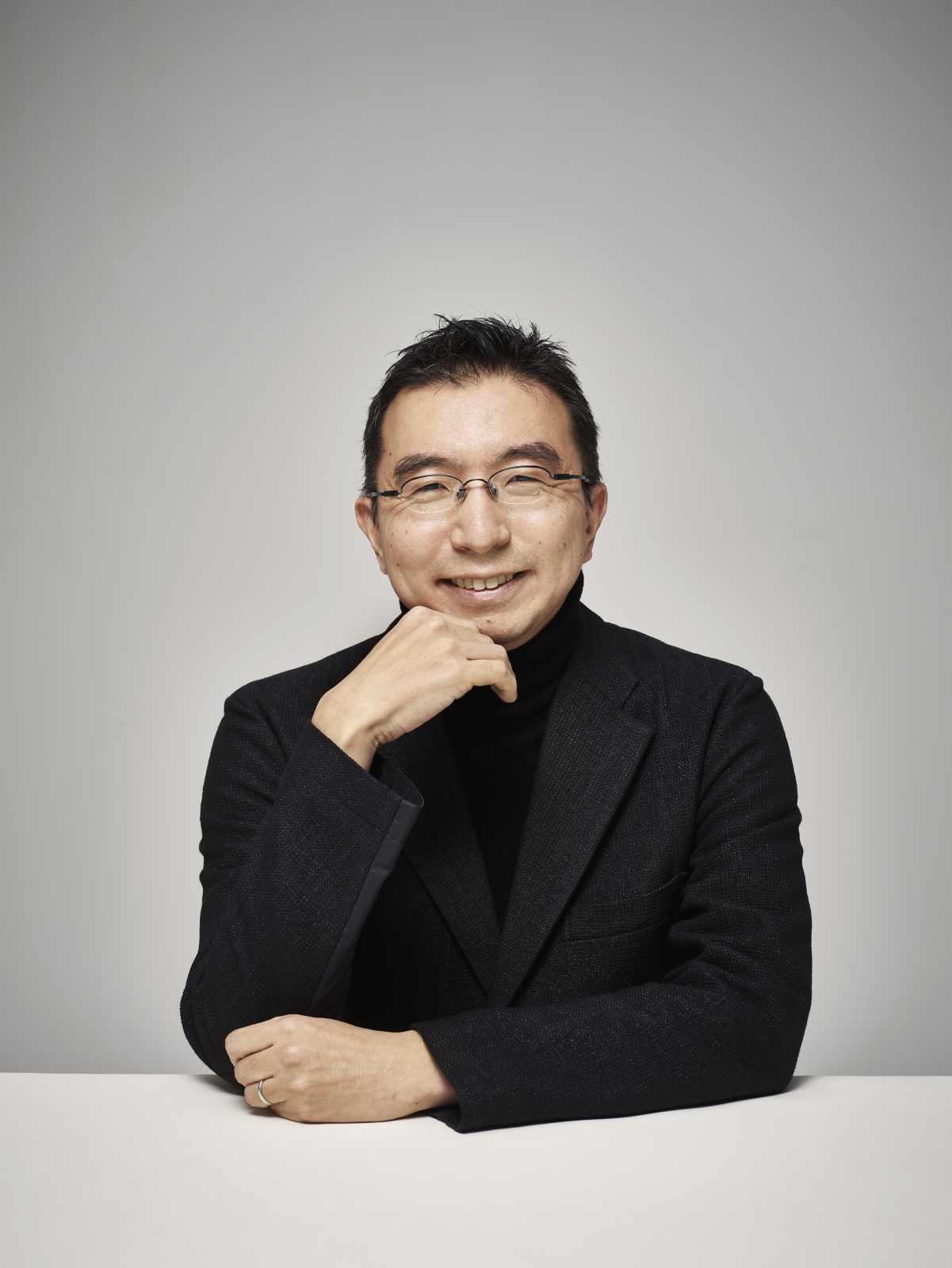
Born in Hokkaido, Japan, in 1971, Sou Fujimoto spent his childhood in nature’s embrace. Graduated from the Department of Architecture, Faculty of Engineering at the University of Tokyo, he established Sou Fujimoto Architects in 2000. His major early works include various facilities such as the Children’s Mental Health Center (Hokkaido, 2006) and the Musashino Art University Museum & Library (Tokyo, 2010), as well as private residences like House N (Oita, 2008). His design philosophy seeks to blur the boundary between the interior and the exterior of a building, forging a seamless connection between people and their environment, allowing them to wander freely amidst nature. The Serpentine Gallery Pavilion 2013 and the 2014 collective housing project L'Arbre Blanc (The White Tree) successively established Sou Fujimoto's reputation in Europe. In 2024, he was selected for “Subcontract for the Basic Design of the International Center Station Northern Area Complex (Tentative)” in Sendai, Miyagi, which is slated for completion in 2031. Furthermore, in his role as the Site Design Producer for Expo 2025 Osaka, Kansai, Japan, he has realized The Grand Ring, the largest wooden ring structure in history.
Read more
Admission
|
Tickets |
Admission |
Applicable to |
|
Early Bird |
NTD$180 |
Gerneral Audiences (Available for purchase through online ticketing platforms by 2026.08.14) |
|
General |
NTD$250 |
Gerneral Audiences |
|
Concessions |
NTD$200 |
|
|
Free |
- |
|
|
||
- Exhibition|The Architecture of Sou Fujimoto: Primordial Future Forest
- Date|2026.8.15 SAT-2027.1.3 SUN
- Venue|
- Main Venue|Jut Art Museum (No.178, Sec. 3, Civic Blvd., Da'an Dist., Taipei City 106, Taiwan)
- Satellite Venue|Taipei Brewery Warehouse (No. 40, Ln. 25, Songjiang Rd, Zhongshan District, Taipei City, Taiwan)
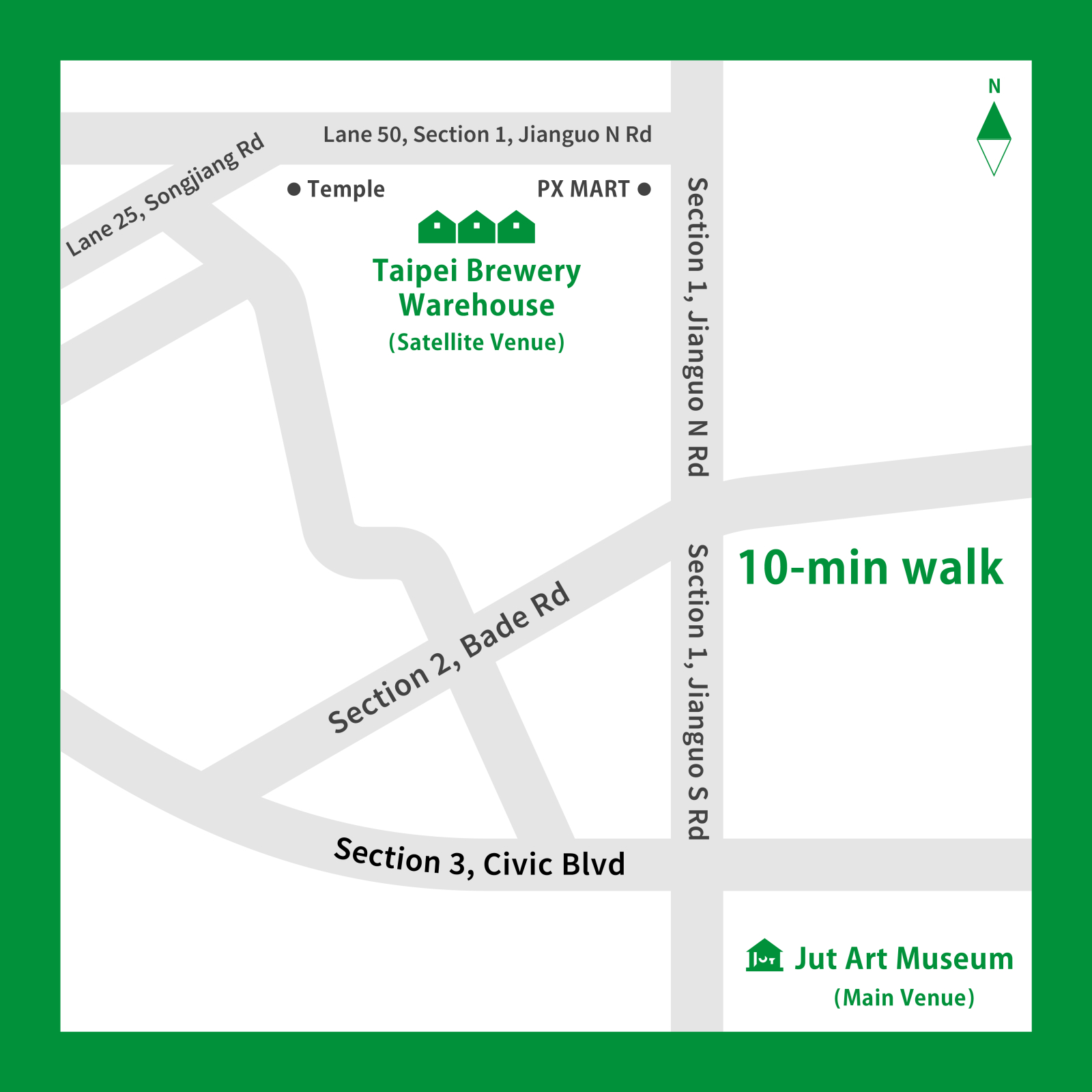
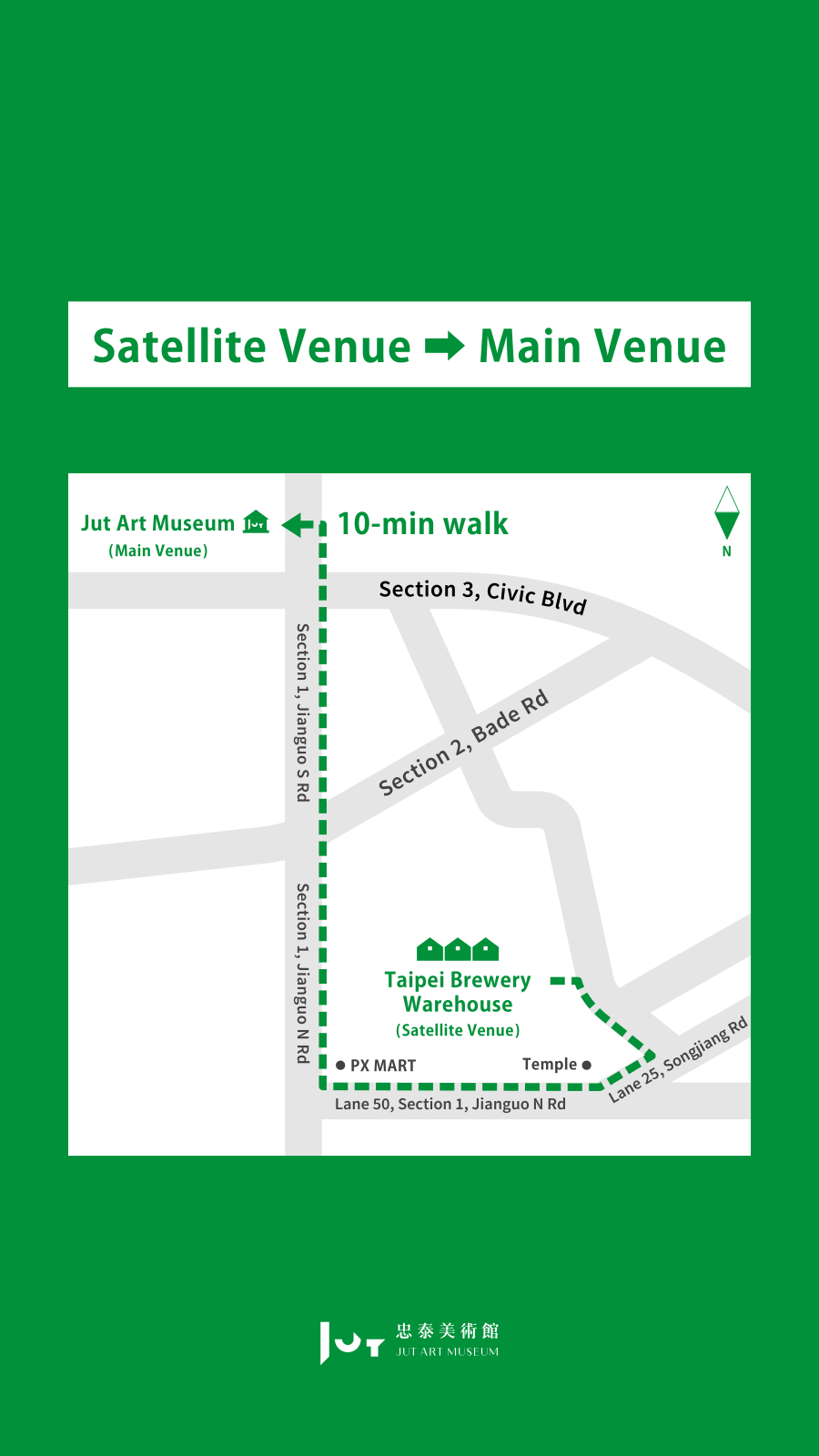
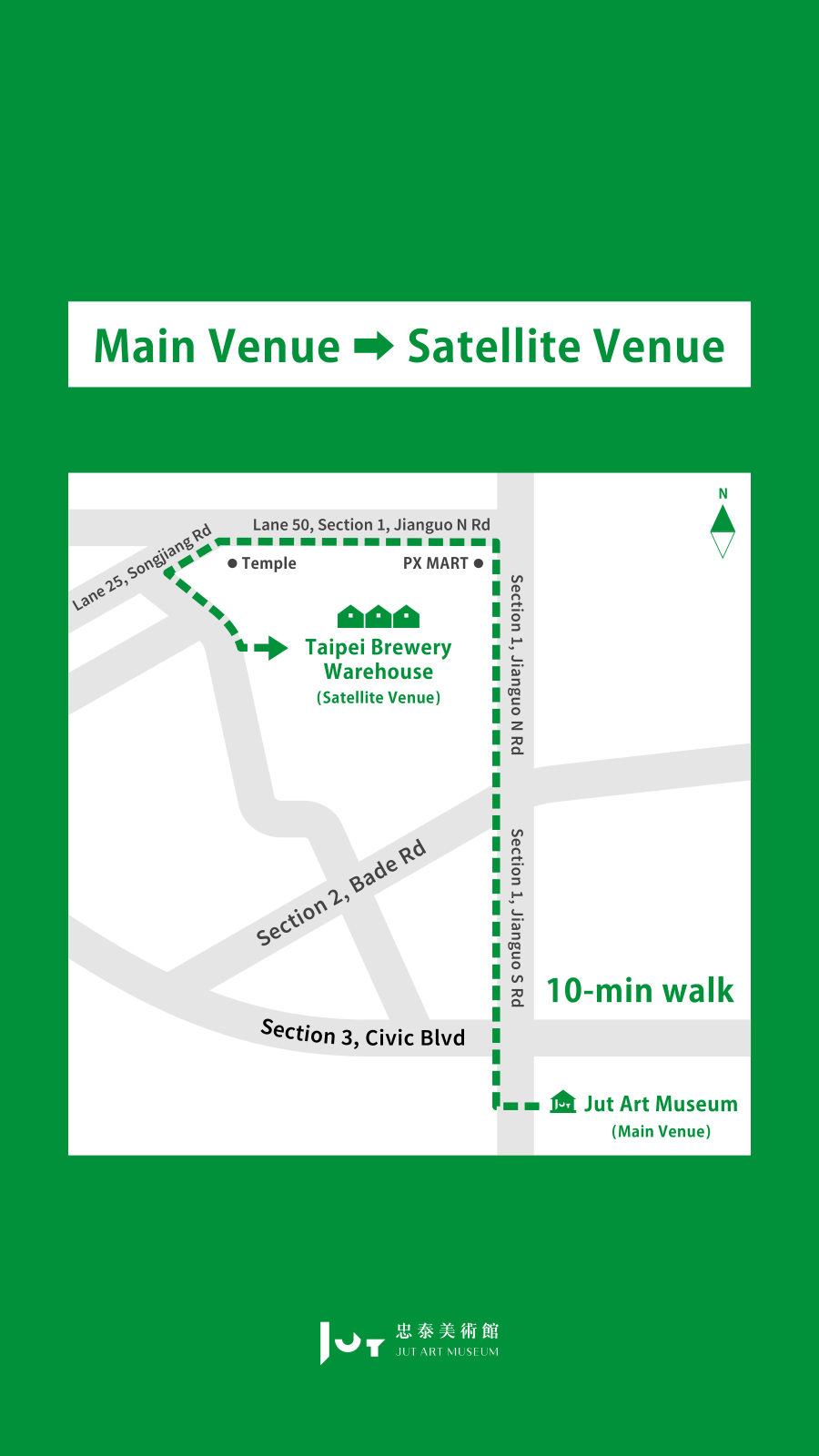
- Opening Hours|TUE-SUN 10:00-18:00 (Closed on Mondays)
- Admission|General TWD 250, Concessions TWD 200 (valid proof required). One ticket grants access to both exhibition venues.
- Where to Buy Tickets|Jut Art Museum(on site)
Where to Buy Tickets|klook, udn, ibon(online) - Free Admission for the disabled and a companion, children aged 12 and under (Concessions or Free Admission upon presentation of valid proof)
- Student Day on WED|Free Admission once on Wednesdays upon presentation of a valid student ID
- Where to Buy Tickets|Jut Art Museum(on site)
- Co-Organizers|Jut Art Museum, Mori Art Museum
- Special Support|Sou Fujimoto Architects
- Original (Tokyo Exhibition) Curators|Kenichi Kondo(Adjunct Curator, Mori Art Museum, Tokyo)
Original (Tokyo Exhibition) Curators|Reiko Tsubaki (Curator, Mori Art Museum, Tokyo) - Original (Tokyo Exhibition) Collaborators|Yoshitaka Haba (Book Director and President of Bach Ltd.)
Original (Tokyo Exhibition) Collaborators|Shunsuke Kurakata (Architectural Historian and Professor at Osaka Metropolitan University)
Original (Tokyo Exhibition) Collaborators|Hiroaki Miyata (Data Scientist and Professor at Keio University)
- Grant|Japan Creator Support Fund, Agency for Cultural Affairs, Government of Japan
- Major Sponsor|JUT Group
- Satellite Venue Partners|Taiwan Tabacco & Liquor Corporation, Alife Holdings
- Appointed TV/ Screen Sponsor|Sony
- Appointed Projector Sponsor| Epson
- Official Hotel Partner|MGH Mitsui Garden Hotel Taipei Zhongxiao
- Cultural Partner|eslite member
- Media Partners|La Vie, MOT TIMES
- Event Partners|NOKE JUT RETAIL, TSUTAYA BOOKSTORE-NOKE, ONIBUS COFFEE, NIKAI, Slice
- Opening Lecture Sponsor|Mega Bank
Exhibition Team
- Exhibition Supervisors|Aaron Y. L. Lee, Alex Y. H. Lee, Shan-Shan Huang
- Exhibition Coordinators|Yen-Hsiu Chen (Jut Art Museum)
Exhibition Coordinators|Mina Takahashi, Sakura Miyake (Mori Art Museum)
Exhibition Coordinators|Hiyori Mihara, Yukino Fujii (Sou Fujimoto Architects) - Technical Supervisors| Norman Chen, Shih-Yi Chen (Jut Group)
Technical Supervisors| Daiki Isono (Sou Fujimoto Architects)
Technical Supervisors| Masaru Suzuki (Beans Co., Ltd.) - Coordinators|Ying-Peng Chen, Tsuei-Yi Jang, Ying-Hsuan Liu
- Communications and Marketing Coordinator|Szu-An Chen
- Communications and Marketing|Yen-Shan Li, Tsu-Han Chan, Yu-Chin Liou, Yi-Ning Lin
- Public Service Coordinator|Tsung-Ping Hung
- Public Service|Pei-Chun Tsai, Chia-Chi Lin
- Administration Coordinator|Hsin-Yi Lin
- Exhibition Assistants|Chun-Ming, Huang(Proofreading), Yin-Yuan Tung, Ya-Hsuan Chang
- Visual Design|60 DEGREE
- Exhibition Graphic Design|Min-Wei Liu
- Lighting Design|LighTemp
- Multimedia Design|UN ART
- Satellite Venue Assistant|Yu-Chen Tsai
- Satellite Venue Lighting and Multimedia Design|Piccolo Perfetto