
|
|
|
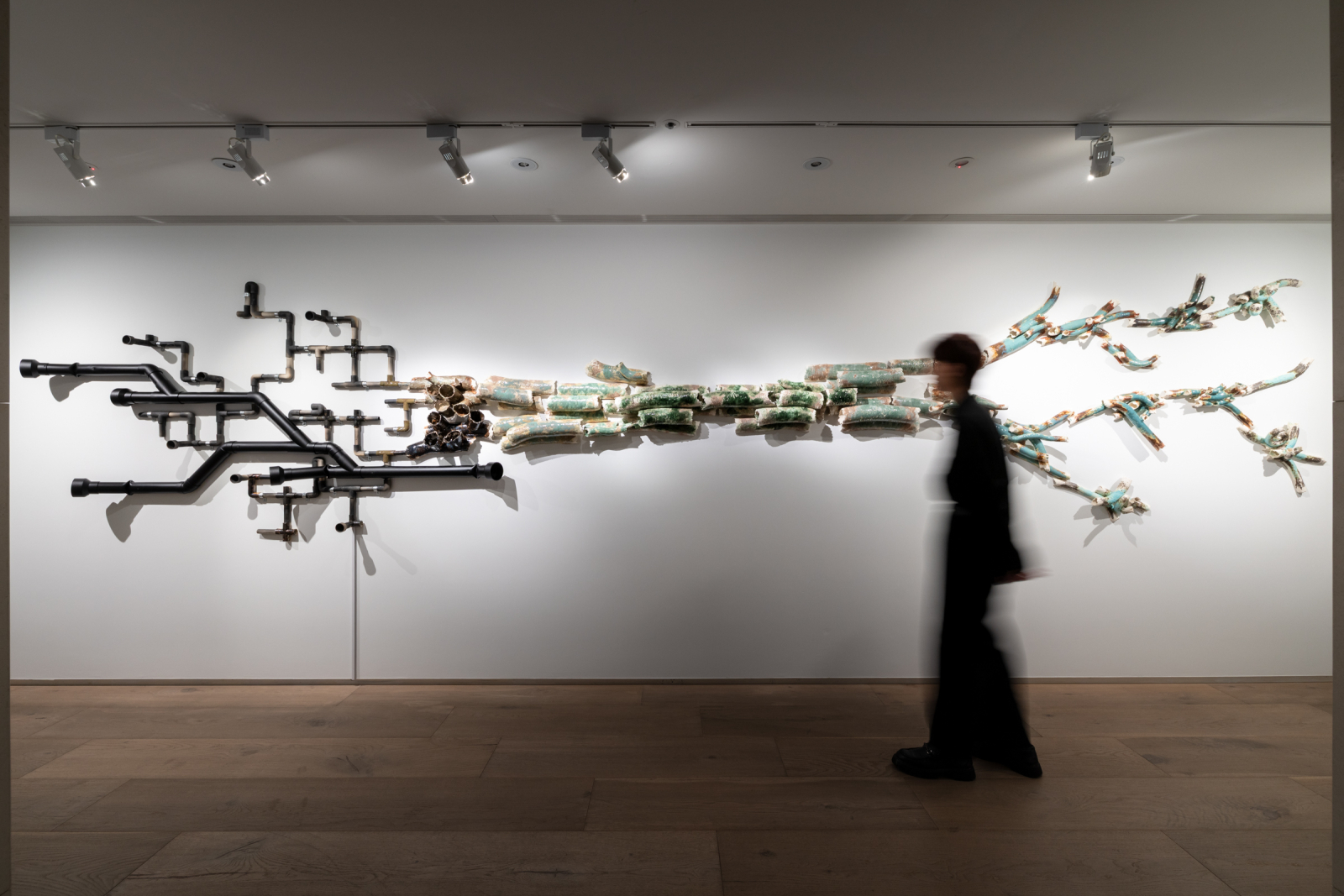
由忠泰美術館委託臺灣藝術家蔡坤霖的創作,嘗試結合其過往田野調查經歷探討臺北的水系。藝術家在臺北水系的水源地福山、直至新店溪及市區的圳道進行水下聲音及土壤的採集。被燒製成陶器的土壤不僅象徵了臺北的水文,更與人工的PVC管互相穿梭,體現出臺北圳道及鐵道互相交織,以及城市開發與自然環境之間錯縱循環、互為因果的關係。
A work commissioned by Jut Art Museum, Taiwanese artist Kuen-Lin Tsai draws on his extensive fieldwork experience to investigate Taipei’s water systems. The artist gathered underwater audio recordings and soil samples spanning from Fushan—the source of Taipei’s water systems—down through the Xindian River and into the city’s irrigation canals. The collected soil, subsequently fired into ceramic ware, not only symbolizes the hydrology of Taipei but also physically intertwines with PVC pipes, embodying the entangled networks of the city’s irrigation and railway systems, as well as the cyclical and interdependent relationship between urban development and the natural environment.
創作自述 Artist Statement
文/蔡坤霖
城市的形成,往往始於對自然的回應,卻也在回應的過程中逐步改寫自然。本件作品以水文為隱喻,回望城市與河流之間長期而複雜的關係:河流曾是城市生成的條件,卻也在都市化的推進下,被引導、截斷、覆蓋,最終轉化為一套不再遵循自然邏輯的人工系統。
水圳,是原本連結的自然溪流,她所承載的地形、土壤與生態所形塑的流向與節奏;然而,當水體進入城市治理與基礎建設的結構中,原本由支流匯聚成主流的自然秩序,被反向拆解為另一種「人工的開枝散葉」。河流不再只是流動的水,而是成為被規劃、被管理、被使用的通道。自然水系與人工水文並置為一種近乎對稱的狀態,使上游與下游、起點與終點彼此模糊。這種失去方向性的結構,並非單純的形式操作,而是一種對城市時間的提問:當自然被不斷轉譯為城市的一部分,究竟是城市改變了河流,還是河流以另一種方式滲入城市?循環是否已成為無法回返的狀態?
聲音在此成為另一條不可見的水流,呈現的是不同水域中生命活動的差異。這些聲音既非敘事,也非警示,而是一種緩慢而持續的不存在,提醒我們:沒聽過的都是噪音,聽不見的皆不存在。本件作品試圖以土壤、色澤、形體與聲音,將城市與自然之間的張力轉化為一件靜默卻持續發聲的地景浮雕。在這裡,城市不被簡化為破壞者,自然也不被浪漫化為失落的原初狀態,而是共同處於一條被反覆改寫、難以判定起點與終點的水文循環之中。
A city’s formation usually starts as a response to nature, yet it progressively reshapes nature itself in the very process of responding. Employing hydrology as a metaphor, this work retrospectively examines the enduring and complex relationship between the city and the river. Rivers were once the prerequisite for urban genesis; however, relentless urbanization has channeled, severed, and obscured them, ultimately transforming them into artificial systems that no longer follow natural logic.
Irrigation canals originally served as links to natural streams, embodying the flow and rhythm shaped by topography, soil, and ecology. Yet, as water bodies are subsumed into the structures of urban governance and infrastructure, the natural order of tributaries converging into a mainstream is engineered in reverse into an “artificial branching.” The river ceases to be mere flowing water. It becomes a conduit that is planned, managed, and utilized. Natural water systems and artificial hydrology are juxtaposed in a state of near-symmetry, blurring the distinctions between upstream and downstream, source and estuary. This structure, devoid of directionality, is not purely a formal manipulation but an inquiry into urban time: As nature is continuously translated into a part of the city, is it the city that has altered the river, or has the river permeated the city in an alternative guise? Has this cycle reached a point of no return?
Sound emerges here as another invisible current, manifesting the variance of life activities across different waters. These sounds are neither narrative nor cautionary; rather, they represent a mode of slow, persistent non-existence. This reminds us: that which has not been heard is dismissed as noise; that which is inaudible is deemed non-existent. Through soil, color, form, and sound, this work seeks to transmute the tension between the city and nature into a landscape relief that is silent yet continuously resonant. Here, the city is not reduced to a destroyer, nor is nature romanticized as a lost primordial ideal. Instead, they coexist within a hydrological cycle that is constantly reshaped, where the beginning and the end are rendered indistinguishable.
關於藝術家 About Artist
蔡坤霖
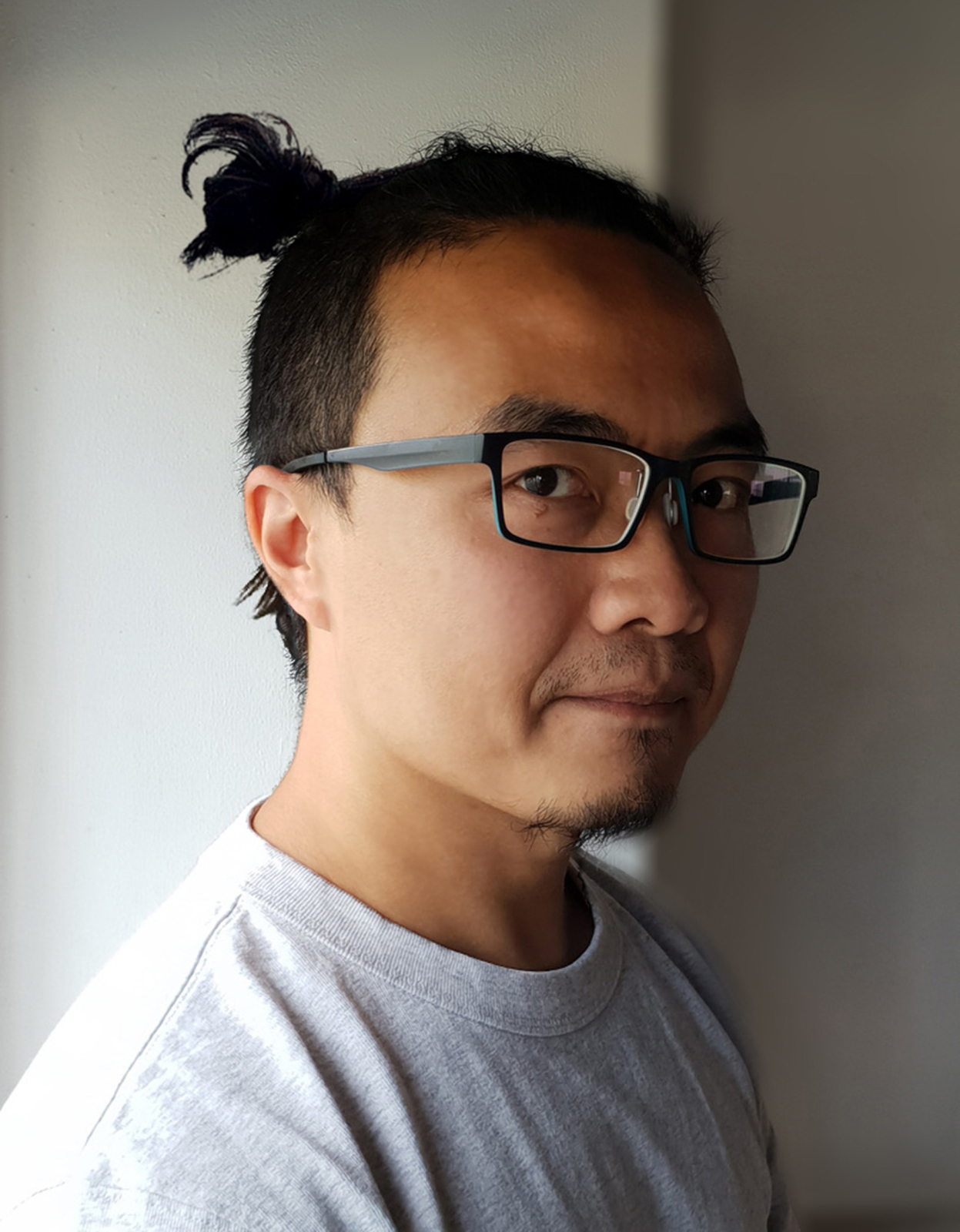
蔡坤霖,出生於臺南,目前生活及工作於臺北,創作形式多元,擅長透過視覺表現去揭示他所聽到的聲音的深度與細緻內容。他的作品試圖重新定義我們對聲音的認知,亦賦予了形式與內容全新的連接。蔡坤霖以此方式來解讀現代人類與自然環境間的複雜關係,並透過其作品來反思當下的全球處境。
作品曾在華盛頓的IA&A藝術中心、曼谷SAC藝廊、中國美術館、東京森美術館、臺北市立美術館、臺南美術館和國立臺灣美術館等地展出。同時,亦多次於澳洲、美國、日本、挪威、泰國、臺灣等地參與藝術進駐計劃。
Kuen-Lin Tsai
Kuen-Lin Tsai, born in 1979 in Tainan, lives and works in Taipei, Taiwan, is a multidisciplinary artist who excels at revealing the depth and intricate details of sounds he hears through visual expression. His works not only redefine our perception of sound but also establish a novel connection between form and content. Tsai employs this method to interpret the intricate relationship between modern humanity and the natural environment, reflecting on the current global situation through his creations.
His pieces have been exhibited at the IA&A Art Center in Washington, SAC Gallery in Bangkok, National Art Museum of China, Taipei Fine Arts Museum, Tainan Art Museum, National Taiwan Museum of Fine Arts, and Mori Art Museum in Tokyo.
He has also participated in artist-in-residence programs in countries like Australia, the United States, Japan, Norway, Thailand, and Taiwan.