
|
外送舞者星球 |
Delivery Dancer’s Sphere |
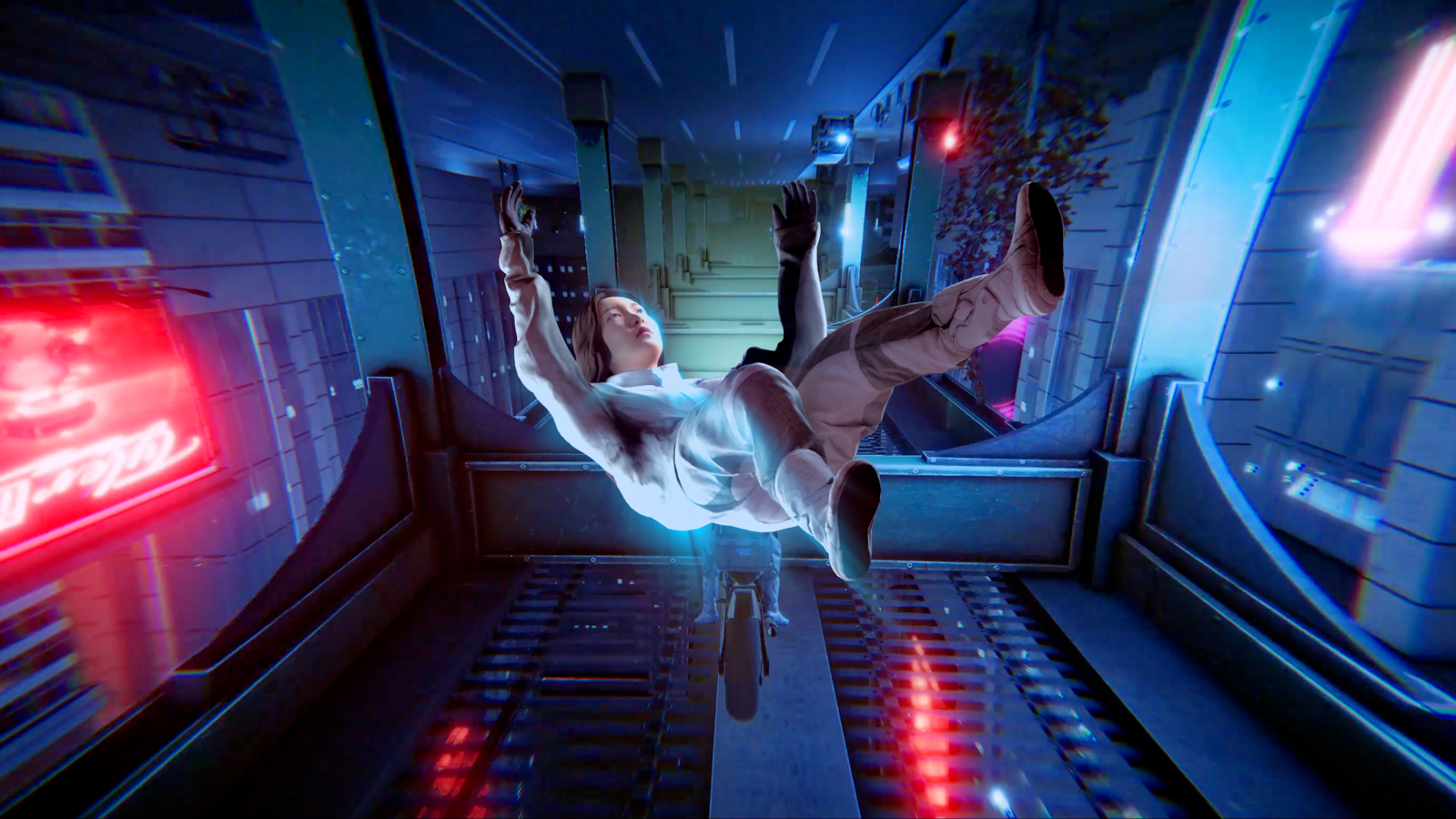
以科幻創作題材著稱的南韓藝術家金雅瑛,震撼於Covid-19期間,僅存外送員於諾大且空蕩的首爾城之中奔馳。藝術家於是想像一座位於未來,由演算法所控制的首爾城。在這座城市之中,被稱為「舞者」的外送員不停地在兩點之間的最短距離上快速移動。
藝術家融合了動漫及流行文化的元素,讓觀者不確定主角之間的糾葛、情愫、對抗及謀殺是所謂何事?
Ayoung Kim, a South Korean artist known for her sci-fi-inspired works, was particularly struck by the sight of delivery riders being the sole figures racing through the vast, deserted streets of Seoul during the Covid-19 pandemic. The artist consequently envisioned a future Seoul dictated entirely by algorithms. In this city, delivery workers—referred to as “Dancers”—move ceaselessly and rapidly along the shortest possible routes between two points.
By integrating elements of anime and pop culture, the artist leaves viewers in a state of ambiguity, uncertain of the truth behind the entanglements, affections, confrontations, and even murders that unfold among the protagonists.
作品說明About Artworks (from Artist)
「漢江一如既往地充斥著抗憂鬱藥、抗組織胺、抗生素和麻醉劑!!!現在是晚上七點,又到了傍晚的尖峰時段!我們將帶您體驗首爾最優雅的路線!」
「『舞蹈大師』總是喜歡把行動量控制到最精簡。因為最佳化等同於優雅。無論物體行經哪一條路徑,自然總是試圖將作用量降到最小……你知道的,對吧?然而,這已無關自然了……」
恩斯特.莫(「怪物Monster」的同字母異序詞)是一位女性外送員,在虛構的首爾裡,為名為「外送舞者」的平台工作。在這個虛構敘事中,首爾是一座由不斷再生的路徑所組成的迷宮,而「舞者」(「外送舞者」平台的外送員)在名為「舞蹈大師」的主控演算法支配下,執行著永無止境的外送任務。
這件作品不僅關乎南韓境內(尤其是疫情期間)極為普遍的零工經濟與平台勞動,也涉及拓樸迷宮、可能世界、過度警覺狀態,以及渴望將身體、時間與空間最佳化的加速主義衝動。作品中亦包含與來自另一個「可能世界」的對應者之間的酷兒關係線索。
身為女性外送員的主角恩斯特.莫,在虛構的首爾裡疾馳。充滿人造光的首爾夜景,介於科技東方主義和亞洲未來主義之間。根據「可能世界理論」,這個世界只是無數世界之一;而在無數世界的邏輯下,完全相同的世界是可能同時存在的。然而,在相同的世界中,個別成員卻未必完全相同。
恩斯特.莫會依據外送舞者應用程式的人工智慧演算法「舞蹈大師」所派發的任務,遵循「舞蹈大師」的導航系統,騎車穿梭於首爾。該系統在算出起點到終點的最短距離後,會向恩斯特.莫顯示如刺繡般優雅的導航路線。無限湧入的外送訂單和無限生成的配送路線彷彿一座迷宮。
恩斯特.莫不時會抵達另一個可能世界的滲漏點,這些可能世界與她自身所處的世界完全相同。出現在那裡、看似與她完全一致的對立存在,名為恩.史多姆(同樣是「怪物Monster」的同字母異序詞)。主角與這個對立實體之間展現出各種無法共存於同一時空的關係狀態,例如敵意、同情和愛慕。這些便是可能世界的事態樣貌,是兩個實體可能存在的方式或模樣,甚至是他們彼此之間可能形成的關係。
因果律在這個世界上似乎已然失靈。上一幕死去的角色隨即在下一幕出現。這個世界就這樣一直被重建並改寫。蒙太奇──這種原本用來縫合鏡頭、撫平人為時間的獨特影像剪輯手法──在此被用來打破因果關係。當句法崩潰時,魔法便開始了。
“As usual, the Han River is soaked in antidepressants, antihistamines, antibiotics and anesthetics!!! It’s 7pm, evening peak time is back! We’ll take you to the most elegant routes in Seoul!”
“Dancemaster always likes to keep the action to a minimum. For Dancemaster, optimization is synonymous with elegance. No matter what path an object travels, nature always strives to minimize action… You know that, don’t you? But this is no longer about nature…”
Ernst Mo (an anagram of Monster) is a female delivery rider who works for a platform called Delivery Dancer in the fictitious Seoul. In this fiction, Seoul is a labyrinth of endlessly regenerating routes, and the Dancers (workers of Delivery Dancer) pursue never-ending delivery work under the control of a master algorithm called Dancemaster.This work is not only about the gig economy and platform labor, which have become immensely popular in South Korea especially during the pandemic, but also about the topological labyrinth, the possible world(s), the hypervigilance, and the accelerationist urge for optimization of body, time and space. It contains hints of a queer relationship with a counterpart from another possible world.
The main character is Ernst Mo. The evening-night view of Seoul filled with artificial lights is somewhere between techno-orientalism and Asian futurism. According to the Possible World theory, this world is one of the innumerable worlds, and according to the logic of innumerable worlds, it is possible that there are two or more perfectly identical worlds. In this same world, even individual members may or may not be perfectly identical.
Ernst Mo is a rider affiliated with the company Delivery Dancer, a delivery platform. Depending on the call received through the operation of Dancemaster, the AI algorithm of the Delivery Dancer app, Ernst Mo rides through several spots in Seoul, following Dancemaster’s navigation system. It calculates the shortest distance from the starting point to the destination and informs Ernst Mo of the elegantly embroidered navigation lines. The infinitely received delivery calls and infinitely generated delivery paths are like a maze.
From moment to moment, Ernst Mo arrives at the points at which another possible world, perfectly identical to her own world, leaks. The name of the opposite entity that appears to be perfectly identical to herself is En Storm (another anagram of Monster). The main character and the opposing entity show various aspects of the relationship, such as antagonism, compassion, and affection, which cannot coexist in the same space and time. These are the states of affairs of possible worlds. These are the ways in which two entities may or could exist, and furthermore the ways they could stand to each other.
This world seems like a world where the logic of causality does not work well. A character who died in the previous scene appears in the next scene. In this way, the world is rebuilt from moment to moment and written differently. Montage, a unique method of video editing that has been developed to suture shots and smooth artificial time, is used in this work to disrupt causality, and the magic begins where the syntax breaks down.
關於藝術家 About Artist
金雅瑛 김아영
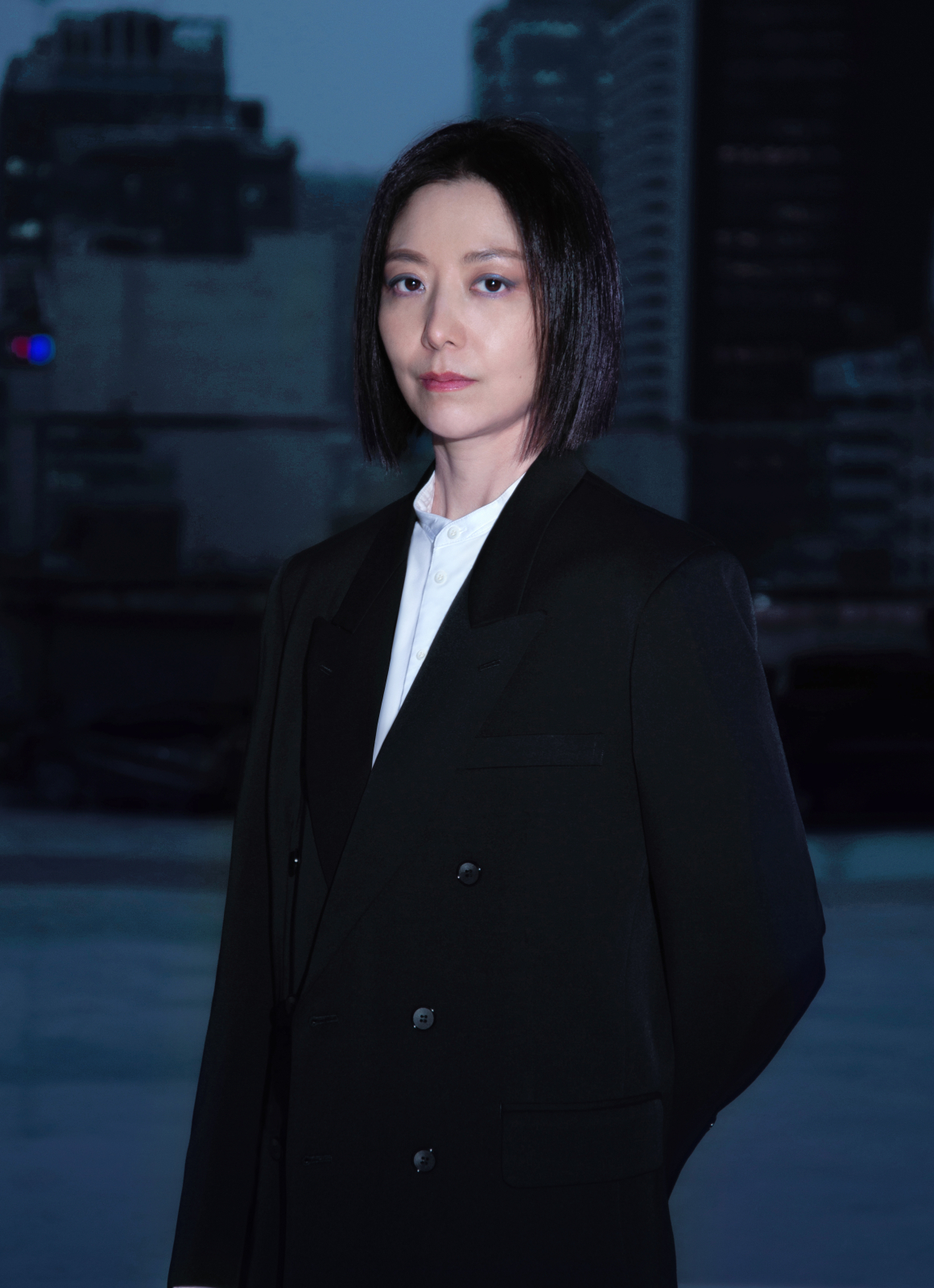
金雅瑛於 1979 年出生於首爾,現生活及工作於韓國首爾。以混合敘事的手法,將地緣政治、神話、科技、技術不穩定性,以及思辨時間性融入其創作之中,重新編織現實。這些綜合而成的敘事引發了深遠的思考,橫跨多種媒體,建構出生命政治與邊境管制、古老記憶與虛擬記憶、先祖起源與迫近未來之間的連結。她的藝術實踐涵蓋對光學與後光學媒體、操演性、遊戲模擬,以及虛構敘事性的相關論述。她也經常描繪那些因抵抗或錯位而偏離既定軌道並留下奇異且獨特痕跡的實體。
金雅瑛的作品曾於多個重要國際機構與展覽中展出,包括MoMA PS1(紐約,2025);M+(香港,2025);漢堡車站美術館(柏林,2025);泰特現代美術館(倫敦,2025);國立國際美術館(大阪,2025);愛馬仕藝廊(首爾,2025);哥本哈根當代藝術中心(哥本哈根,2025);森美術館(東京,2025);澳洲動態影像中心(墨爾本,2024);紐約現代藝術博物館(2024);M+(香港,2024);沙迦雙年展(2023);林茲電子藝術節(2023);鹿特丹國際影展(2023);亞洲藝術雙年展(臺中,2021);柏林國際影展(2020);釜山雙年展(2020)等。作品曾獲得諸多榮譽獎項,包括香奈兒文化基金會頒發的香奈兒Next大獎;所羅門・R・古根漢基金會頒發的LG古根漢獎(美國,2025);國立亞洲文化殿堂未來獎(韓國,2024);林茲電子藝術節金尼卡獎(奧地利,2023);以及影像論壇藝術節寺山修司獎(日本,2023)。
Ayoung Kim
Ayoung Kim weaves reality anew through a tapestry of hybrid narratives, integrating geopolitics, mythology, technology, techno precarity, and speculative temporalities into her work. The outcomes of synthesized narratives result in far-reaching speculation, establishing connections between biopolitics and border controls, the memories of stones and virtual memories, and ancestral origins and imminent futures across various media. Her practice incorporates discourses on optical and post-optical media, performativity, game simulation, and the narrativity of fiction. Kim often depicts entities whose resistance or misalignment leaves behind strange and singular traces as they deviate from prescribed trajectories.
Kim’s works have been presented at MoMA PS1, New York (2025); Performa Biennial, New York (2025); M+, Hong Kong (2025, 2024); Hamburger Bahnhof, Berlin (2025); Tate Modern, London (2025); The National Museum of Art, Osaka, Osaka, (2025); Atelier Hermès, Seoul (2025); Copenhagen Contemporary, Copenhagen (2025); Mori Art Museum, Tokyo (2025); ACMI, Melbourne (2024); MoMA, New York (2024); Sharjah Biennial (2023); International Film Festival Rotterdam (2023); Asian Art Biennial, Taichung (2021); Berlin International Film Festival (2020); Palais de Tokyo (2016); and the Venice Biennale (2015), among others. She has received the Chanel Next Prize from the Chanel Culture Fund (2026); the LG Guggenheim Award from the Solomon R. Guggenheim Foundation, United States (2025); the ACC Future Prize from the National Asian Culture Center, Korea (2024); the Golden Nica Award at Prix Ars Electronica, Austria (2023); and the Terayama Shuji Prize at the Image Forum Festival, Japan (2023).