
|
居所:(在某處)另一個國家計畫 |
Habitations: (At Some Place) Project Another Country |
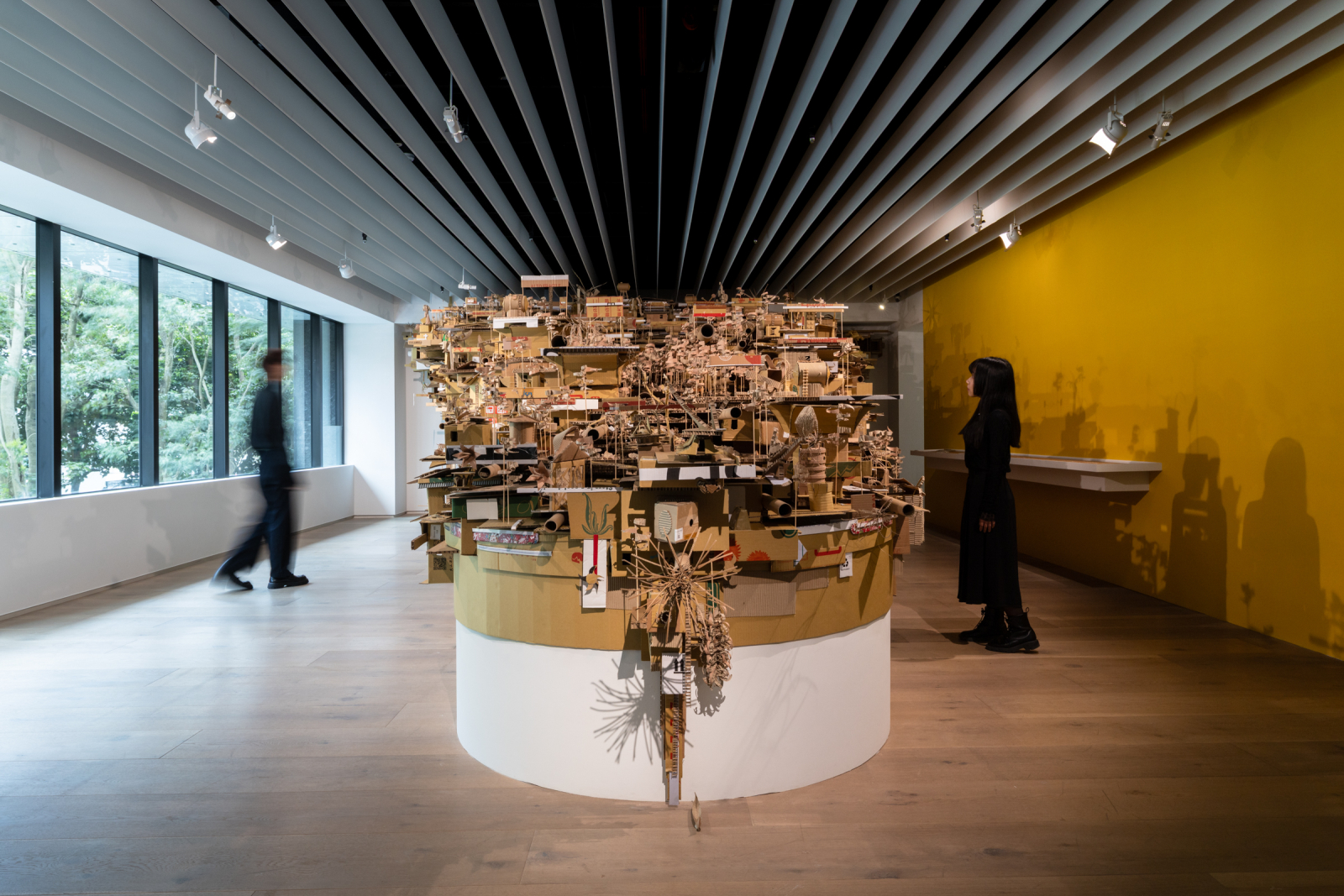
菲律賓藝術家伊莎貝爾和艾佛雷多.阿奎禮贊的作品,長期以其移民經驗想像都市的可能性。藝術家首次將其著名的《另一個國家計畫》系列作品移師至臺北進行駐地創作:他們常使用最簡便的紙箱作為媒材,並邀請當地社群共同參與。
此次臺北版的創作為藝術家及其親友成立的藝術團體The Fruitjuice Factori Studio Collective一同創作,並邀請中山女高同學及忠泰集團的同仁,共同建造出屬於臺北居民的想像之城。
這是一座山谷蜿蜒、充滿水塔及高架橋的島嶼之城,亦是從小居住於呂宋島北岸的艾佛雷多.阿奎禮贊所想像的「彼岸之島」。
In their works, Filipino artists Isabel and Alfredo Aquilizan have long drawn on their migratory experiences to envision urban possibilities. For the first time, the artists have brought their renowned Project Another Country to Taipei for a site-specific residency. Frequently utilizing easily accessible cardboard boxes as their primary medium, they invite local communities to participate in the creative process.
This Taipei edition was realized in collaboration with The Fruitjuice Factori Studio Collective—an art collective founded by the artists, their family, and friends—and engaged students from Taipei Municipal Zhongshan Girls High School as well as colleagues from the Jut Group to collectively construct an imaginary city belonging to Taipei’s residents.
It is an island city featuring serpentine valleys and bristling with water tanks and viaducts. It also represents the “island on the other shore” envisioned by Alfredo Aquilizan, who grew up on the northern coast of Luzon.
作品說明 About Artworks (from Artist)
文/藝術家提供
伊莎貝爾&艾佛雷多.阿奎禮贊的創作圍繞著家和家庭的範疇展開,探索身份與歸屬、遷徙與離散等議題,同時在積累的記憶中,感知缺席的存在。他們透過抽象化與指涉性的材料和物件來處理這些經驗,使其成為了日常人類生活的隱喻。阿奎禮贊夫婦以其持續發展的系列作品《另一個國家計畫》聞名,該系列包含與世界各地社群共同創作的大型裝置作品。這些作品具有場域特定性,並以來自離散社群中蒐集,曾被使用過的物件作為創作材料。
「對話」是阿奎禮贊藝術實踐的核心──這種對話存在於從作品的構思、發展到完成後仍持續進行的過程之中,也存在於他們與共同創作者之間。藝術家透過創作開展出多重維度,使人們得以在其中彼此相聚與交流。由此,Fruitjuice Factori Studio 所構築的烏托邦式空間,使我們得以彼此歸屬。這些空間讓我們看見關於築巢、歷史和定居的故事,彼此交織且依存。這些對話棲居於我們周遭的環境,使我們能夠共同重新構想我們的生活方式。
本次展出的《另一個國家計畫》,是特別與臺北多元而多樣的居民共同創作,正是這些居民構成了臺北持續延展、堅韌與豐厚的歷史脈絡。伊莎貝爾&艾佛雷多.阿奎禮和The Fruitjuice Factori Studio Collective希望藉由這次相聚的契機,開啟關於「新常態」的對話。他們既指向社會實踐的再生,亦追溯其重塑與重構的軌跡。轉變的過程要求我們回望集體記憶──那些非線性的時空紀錄。此作品具有雙重視角,既展望未來,也回溯過去。這些關鍵時刻塑造著我們每一個人,使我們在面對不確定未來時不斷被形構。〈居所:(在某處)另一個國家計畫〉如同停泊於啟航之港上的船艦,為我們航行於即將到來的地緣政治、經濟與社會文化版圖時,規劃出面對21世紀挑戰的航線。
Isabel and Alfredo Aquilizan’s collaborative practice orbits the spheres of home and family, exploring notions of identity and belonging, journey and displacement, sensing presence in absence while accumulating memory. They process this experience through materials and objects that are abstracted and referential, which serves as metaphors for everyday human life. The Aquilizans are known for their ongoing seminal series titled ‘Project Another Country’ that features monumental installations co-created with communities around the world. Their works are site-specific, made from objects sourced and once used by diasporic communities.
Crucial to the Aquilizan’s practice is dialogue - a dialogue created during an artwork’s evolution from its conception to its afterlife, and with people they create with. The artists multiply spaces where people can commune with one another. With this, the Fruitjuice Factori Studio builds utopian spaces where we can also belong to each other. We are given places where we see our stories of home-making, history and settlement as inter-related; symbiotically-bound. These conversations inhabit our immediate environment so we can then engage in collective reimagining of our ways of living.
For the upcoming edition of Jut Art Museum, an iteration of Project Another Country will be created specifically in collaboration with Taipei’s variegated inhabitants, who make up Taipei’s persistent, resilient, and rich history. Isabel and Alfredo Aquilizan + FFS aim to instigate conversations around “the new normal” within this present opportunity of coming together. They gesture towards the regeneration of social practices, while tracing how they are reshaped and reconfigured. The process of transformation requires us to look back at collective memory as non-linear records of time and space. The work has a double-vision in looking to the future and the legacy of the past. These critical periods mould each of us as individuals facing uncertain futures. Habitations: (At Some Place) Project Another Country docks at a port of departure in charting ways we might face 21st century challenges as we circumnavigate the geopolitical, economic, and socio-cultural landscapes to come.
關於藝術家 About Artist
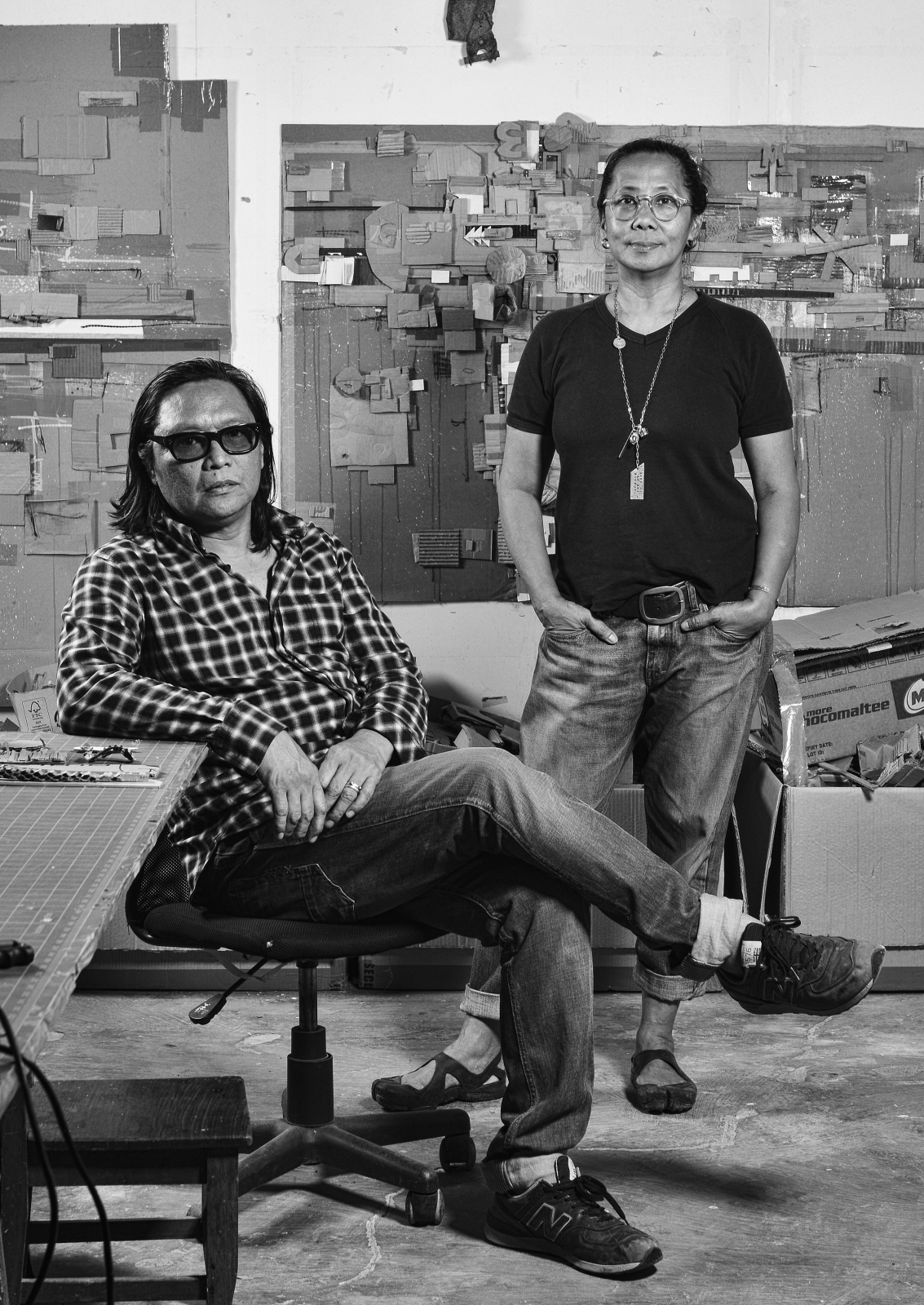
伊莎貝爾&艾佛雷多.阿奎禮贊
伊莎貝爾&艾佛雷多.阿奎禮贊(分別生於1965年和1962年)曾在世界各地的畫廊和藝術機構舉辦過大量展覽,例如福岡亞洲美術館(日本)、奧克蘭美術館(紐西蘭)、移民博物館(澳洲)、昆士蘭美術館 | 現代藝術館(澳洲)、新加坡美術館(新加坡)和日本宮(德國)。他們也曾參與釜山雙年展(2019)、泰國雙年展(2018)、江原道國際雙年展(2018)、沙迦雙年展(2013)、亞太三年展(2009)、新加坡雙年展(2008)、雪梨雙年展(2006)、光州雙年展(2004)及威尼斯雙年展(2003)等。
他們的作品被許多重要機構收藏,例如謝爾曼當代藝術基金會(澳洲)、新加坡美術館、福岡亞洲美術館、昆士蘭美術館 | 現代藝術館、MAIIAM當代藝術博物館(泰國)以及洛佩茲博物館基金會(菲律賓)。 2019年,阿奎利贊夫婦和Fruitjuice Factori Studio受委託在美國加州門洛帕克市的Facebook總部創作了一件特定場域作品。
Isabel and Alfredo Aquilizan
Isabel and Alfredo Aquilizan (b. 1965 and 1962) have exhibited extensively in galleries and institutions worldwide, such as at the Fukuoka Asian Art Museum (Japan), Auckland Art Gallery (New Zealand), Immigration Museum (Australia), Queensland Art Gallery | Gallery of Modern Art (Australia), Singapore Art Museum (Singapore), and Japanisches Palais (Germany). They have participated in the Busan Biennale (2019); Thailand Biennale (2018); Gangwon International Biennale, South Korea (2018); Sharjah Biennale, UAE (2013); Asia Pacific Triennale, Australia (2009); Singapore Biennale (2008); Biennale of Sydney, Australia (2006); Gwangju Biennale, South Korea (2004), Venice Biennale, Italy (2003), amongst others.
Their works are included in the major collections such as the Sherman Contemporary Art Foundation (Australia); Singapore Art Museum; Fukuoka Asian Art Museum; Queensland Art Gallery | Gallery of Modern Art; MAIIAM Contemporary Art Museum (Thailand); and Lopez Museum Foundation (Philippines). In 2019, the Aquilizans (Fruitjuice Factori Studio) were commissioned to create a site-specific work at Facebook’s headquarters at Menlo Park, California, USA.
The Fruitjuice Factori Studio Collective
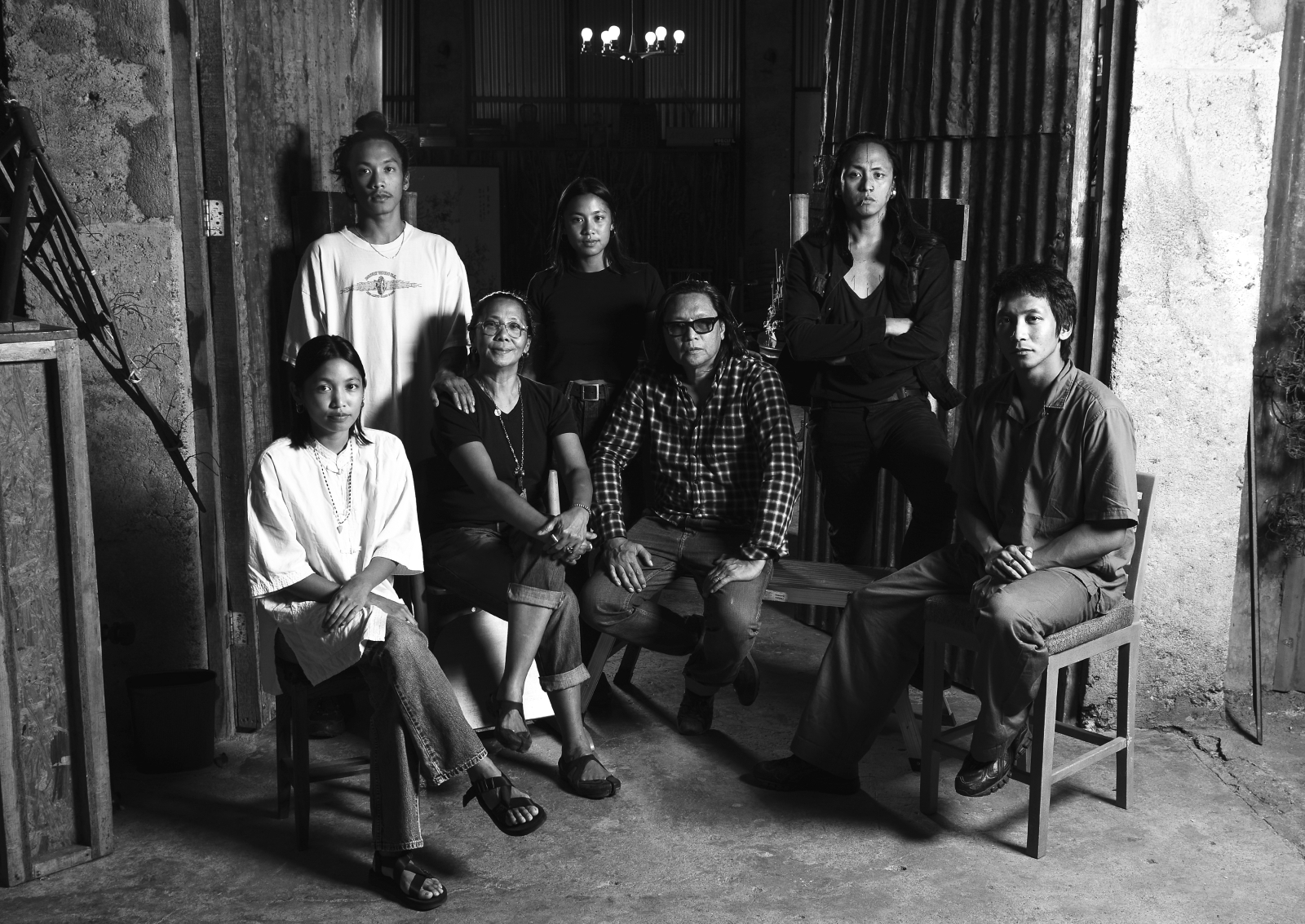
2012年,當代藝術家艾佛雷多和伊莎貝爾.阿奎禮贊夫婦在洛斯巴尼奧斯購買了一座廢棄的椰果和果汁工廠。洛斯巴尼奧斯是他們移民前所居住並養育五個孩子的故鄉。如今,這裡成為了The Fruitjuice Factori Studio Collective(簡稱FFS)的藝術創作基地。艾佛雷多和伊莎貝爾.阿奎禮贊夫婦與他們的五個成年子女共同組成了此藝術創作團體。工廠本身具有生產場域的歷史,長期連結地方社群與跨國網絡。FFS的創作不受國界限制,他們經常邀請不同的藝術家和工匠參與其裝置作品的創作,並進行遊牧式的迭代。這種過去與現在的融合,凸顯了該團體在建構一種跨越地方、國家和區域界線之社群中所扮演的角色。
FFS致力於透過文化生產打造全球化的社區,並在其中讓在地社群以參與式藝術創作的方式投入其中,亦同時建立各種網絡以鼓勵能夠促成改變的文化實踐。此外,FFS也著重於阿奎禮贊夫婦經常提到的「making do」精神,即善用手邊可得的資源進行創作,並特別強調以再利用與升級再造為核心的實踐方式。
FFS回應歷史所留下的遺緒,同時也關注當前所面臨的社會議題,致力於擾動並瓦解藝術生態中帶有殖民性的有害運作方式,並優先考慮創作者的自決權和自主權。FFS也將藝術所具備的文化活力與抵抗力作為創作的基礎──藉由藝術去連結、見證和教育,並留下記錄。
本此The Fruitjuice Factori Studio Collective成員包括:Aditya Kurniawan、Amihan Aquilizan、Aniway Aquilizan、Diego Aquilizan、Le Aquilizan、Lindy Brown和Zoe Taylor-Fardon。所有核心成員居住在澳洲布里斯本、墨爾本和菲律賓拉古納省洛斯巴尼奧斯之間。
In 2012, contemporary artists Alfredo and Isabel Aquilizan acquired a former nata de coco and fruit-juice factory in Los Baños, a town where they once nested and raised their five children prior to emigration. This site now serves as a base for the Fruitjuice Factori Studio (FFS) collective. Alfredo and Isabel Aquilizan practice with their five adult children as the art-making collective. The history of the factory as being a place of production has long connected the local community to transnational spheres. FFS is borderless, often involving different artists and artisans in nomadic iterations of their installations. This synergy of the past and present foregrounds the collective’s role in creating a community that transcends local, national and regional borders.
The studio sets out to create globalized neighborhoods through cultural production, where local communities are engaged in participatory art works. The studio nourishes networks that encourage cultural practice which creates change. As well as this, the artists focus on what the Aquilizans often state as ‘making do’, with strong concentration on upcycling.
The Fruitjuice Factori Studio Collective responds to historical legacies as well current issues we face. They work to disrupt and dissolve colonizing harmful practices in art ecologies, prioritizing the self-determination and autonomy of creatives. The Fruitjuice Factori Studio uses art’s role in cultural vitality and resistance as foundations of their work; to connect, to witness, to educate and record.
This iteration involves Aditya Kurniawan, Amihan Aquilizan, Aniway Aquilizan, Diego Aquilizan, Le Aquilizan, Lindy Brown, and Zoe Taylor-Fardon. All active core members of the Fruitjuice Factori Studio reside between Brisbane/ Melbourne (Australia), Australia and Los Baños, Laguna (Philippines).