
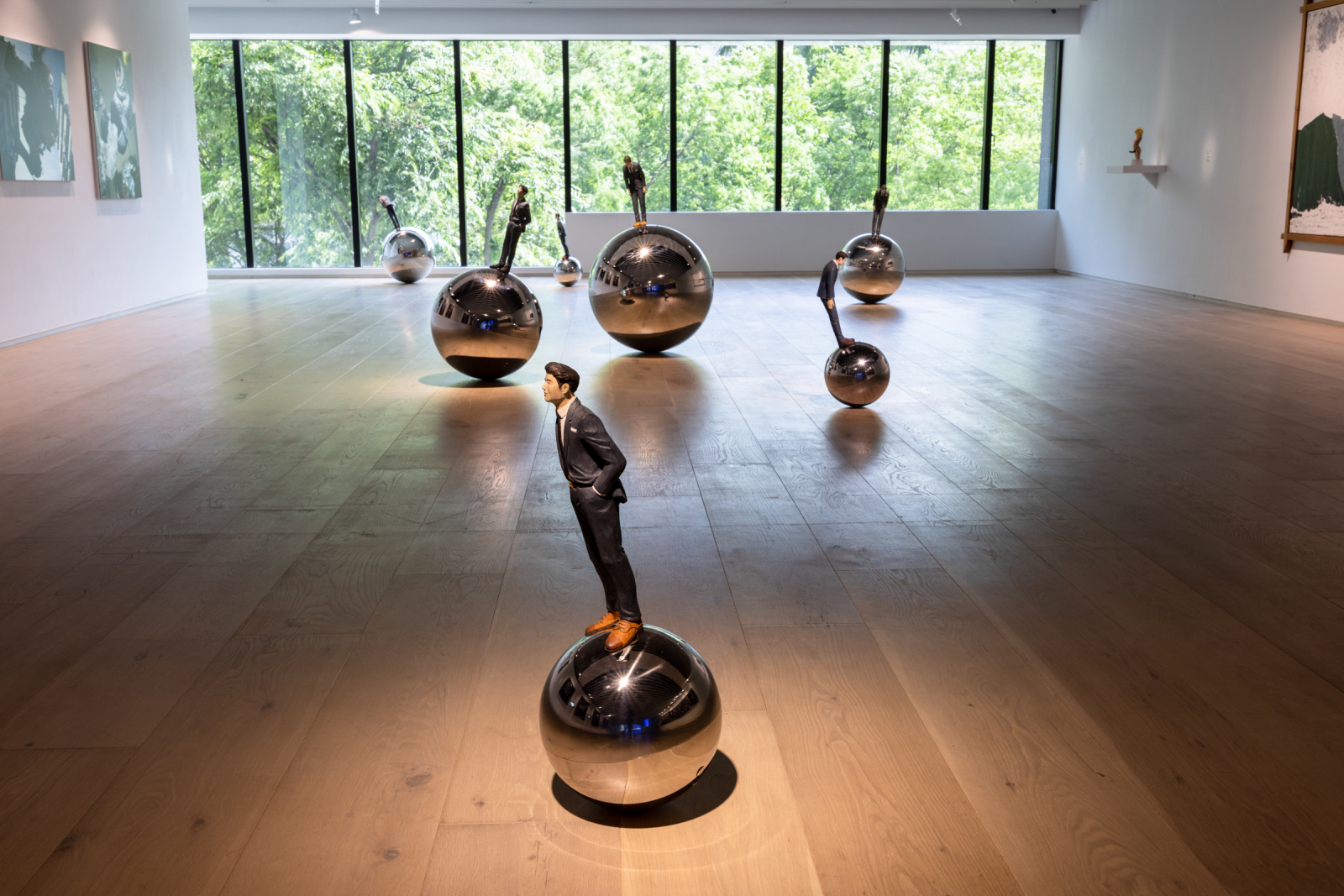
| 合群系列I&II 2017-2023 木、不鏽鋼球、動力裝置、感應裝置、聲音裝置 依場地而定 |
Fit In Series I & II 2017-2023 Wood, stainless steel ball, kinetic device, sensor, sound device Dimensions variable |
作品簡介 / 創作自述 About Artworks
《合群系列》以塑料模型製作和機器仿製加工得到的木雕粗胚(有形體而無細節),再進行手工修製完成,透過此種可以持續增加數量的方法,使人像具有類似卻又獨立的狀態,與雕塑平常運用複製的方法和目的皆有所區別,對藝術家來說更近於模仿而非複製,也因此更貼近合群的概念。透過主觀印象/想像形成的人像群體,由他們說明自身,除了彰顯某種秩序或結構,也試圖使觀者一起探詢關於「合群」的個體價值。其中,《合群系列I&II》兩組皆使用了不鏽鋼球體裝置,透過球體自主的晃動,形塑出一群不穩定的群像,作品的視覺狀態與座落的位置都會因為時間的變化而有所改變,而這不安穩的狀態使得觀者在觀看的同時,也將被一同帶入這不安穩的環境之中,搖晃擺盪,尋找一個踏實之地。
The Fit In Series I & II comprise hand-finished human figures from rough woodcarvings (rudimentary forms without details) made with plastic molds and duplicated by machine. This approach allows these human figures to continuously grow in number, which renders them as similar as discrete. Differing in method and purpose from the usual sculptural reproduction, this approach is for the artist not so much reproduction as imitation, hence closer to the concept of “fit in.” Created from subjective impression/imagination, this group of human figures speaks for itself. In addition to highlighting a certain kind of order or structure, these human figures encourage the viewers to explore the value of individuals in the “fit-in” process. The Fit In Series I & II employ stainless steel ball devices whose spontaneous swaying motion conveys an impression of instability. Both the visual layouts and the locations of the works change over time. Such an arrangement ergo immerses the viewers in a volatile situation of swinging in which they are seeking a place where they could settle down.
關於藝術家 About Artist
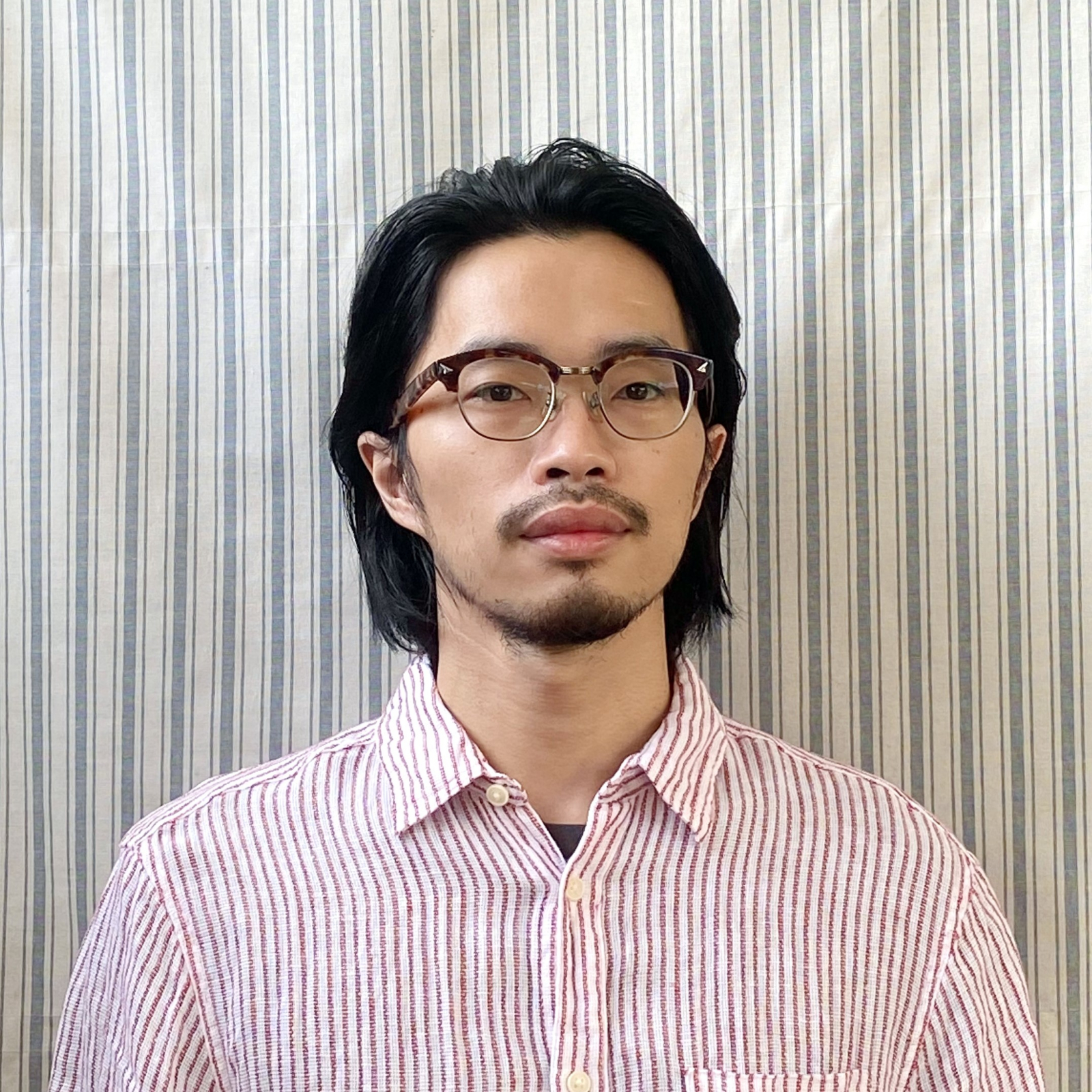
©耿傑生
耿傑生
1989年生於臺灣臺中,畢業於臺北藝術大學美術系和臺灣藝術大學雕塑研究所。創作形式以雕塑和裝置為主,關於雕塑的學習及實踐是從木雕開始,隨後逐漸擴展和融入對空間與感知的理解;近期關注身體和生活週邊技術的關係,從個人經驗出發,去感受、發現技術重新塑造環境的狀態,尋找落在社會和文化中的線索,嘗試錨定當今身體的位置和變化。
Chieh-Sheng Keng
Born in 1989, Chieh-Sheng Keng graduated from the Department of Fine Arts, Taipei National University of the Arts and the Graduate Institute of Sculpture, National Taiwan University of Arts. He currently lives and works in New Taipei City, Taiwan. Initiating his study and practice of sculpture with woodcarving, he later integrated his knowledge about space and perceptions to explore more possibilities about sculpture. He employs a diverse range of media, mainly sculpture and installation, as well as video and performance. His recent focus has been on the relationship between bodies and technologies in our life. Beginning from his personal experience, which is to feel and discover how these technologies have reshaped the environments, and looking for social and cultural clues, he tried to anchor our bodies to the environments and identify how they’ve evolved into today’s form with his work.